
Fungus gnat
Bradysia paupera
Description
How to identify
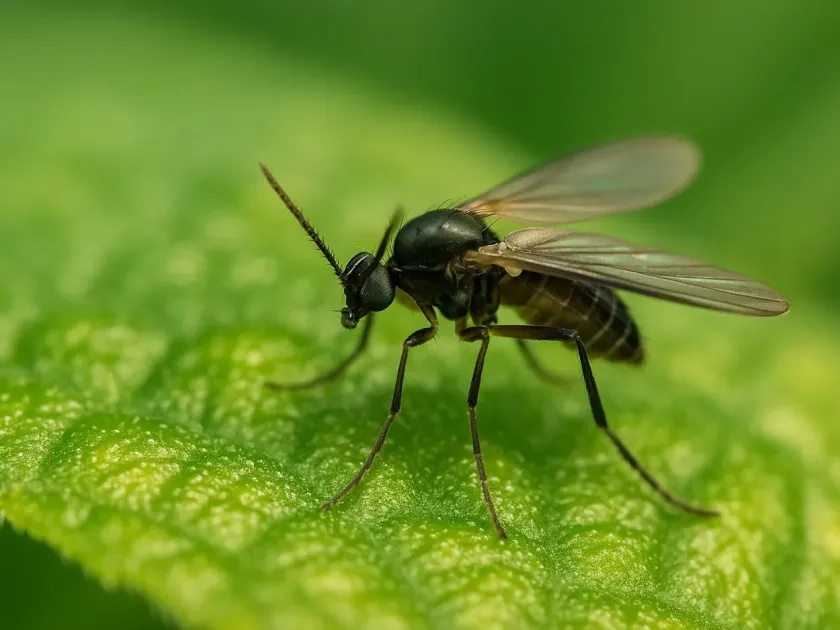
The fungus gnat (Bradysia paupera) belongs to the Sciaridae family, order Diptera. Adult insects are small, mosquito-like creatures with dark bodies and clear wings, typically reaching 3–4 mm in length.
The life cycle involves four stages: egg, larva, pupa, and adult. Females prefer to lay eggs in moist, organic-rich soil, where conditions are optimal for larval development.
The larvae are easily identified by their translucent, legless bodies and distinct, shiny black head capsules. They usually grow to about 5 mm in length.
Adults have a very short lifespan, typically less than a week, but their high reproductive rate allows for rapid population growth in greenhouses and indoor gardens.
These pests thrive in humid environments with low air circulation, making indoor plant setups and greenhouse propagation areas their primary habitats.
What it damages
While adult fungus gnats are mostly a nuisance, their larvae cause significant damage by feeding on roots, root hairs, and the stems of young seedlings.
Heavy infestations of larvae can completely destroy the root system of sensitive crops, leading to the wilting and eventual death of young plants.
Fungus gnats affect a wide range of plants, including greenhouse vegetables, ornamental flowers, and indoor potted plants, especially those grown in peat-based mixes.
Larval feeding creates lesions on roots, which become entry points for soil-borne pathogens like Pythium and Fusarium, causing root rot and damping-off disease.
Adults act as vectors, moving fungal spores and plant viruses from one pot to another, significantly increasing the risk of widespread disease in a nursery.
Signs of infestation
The most obvious sign of an infestation is the presence of small, dark flies hovering above the soil or moving rapidly across the substrate when disturbed.
Plants often exhibit signs of stress, such as yellowing leaves, stunted growth, and a general lack of vigor, even when environmental conditions appear appropriate.
Upon closer inspection of the topsoil, one might see small, semi-transparent larvae wiggling just beneath the surface or emerging after a thorough watering.
The presence of fine, dark excrement on the soil surface can also indicate a high concentration of larvae within the root zone.
Sudden wilting of seedlings in a tray is a classic symptom, usually indicating that the root systems have been severely compromised by larval feeding.
Control measures
The most important control measure is soil moisture management. Allowing the top few centimeters of soil to dry out between waterings disrupts the larval life cycle.
Yellow sticky cards are highly effective for monitoring and reducing the adult population, preventing females from laying further eggs in the growing medium.
For more severe cases, soil drenching with appropriate insecticides or the application of biological agents like beneficial nematodes (Steinernema feltiae) is recommended.
Keeping the growing area clean by removing decaying plant matter and ensuring good drainage prevents the accumulation of the organic debris gnats love.
- Use sterile potting soil for new plantings to prevent introduction.
- Screen greenhouse vents to block adult entry.
- Avoid overwatering and ensure pots have proper drainage holes.
- Use biological control methods to maintain a healthy root environment.
Taxonomy
- Latin name
- Bradysia paupera
- Order
- Diptera (flies)
- Family
- Sciaridae
- EPPO code
- BRAIPA
Discussion
No discussions yet — be the first.