
Sciara militaris
Sciara militaris
Description
How to identify
Sciara militaris, commonly known as a type of fungus gnat, belongs to the family Sciaridae within the order Diptera. The adults are small, dark-colored flies characterized by their delicate wing structure.
The life cycle includes four stages: egg, larva, pupa, and adult. The larvae are easily identified by their translucent, worm-like bodies and a distinctive shiny black head capsule.
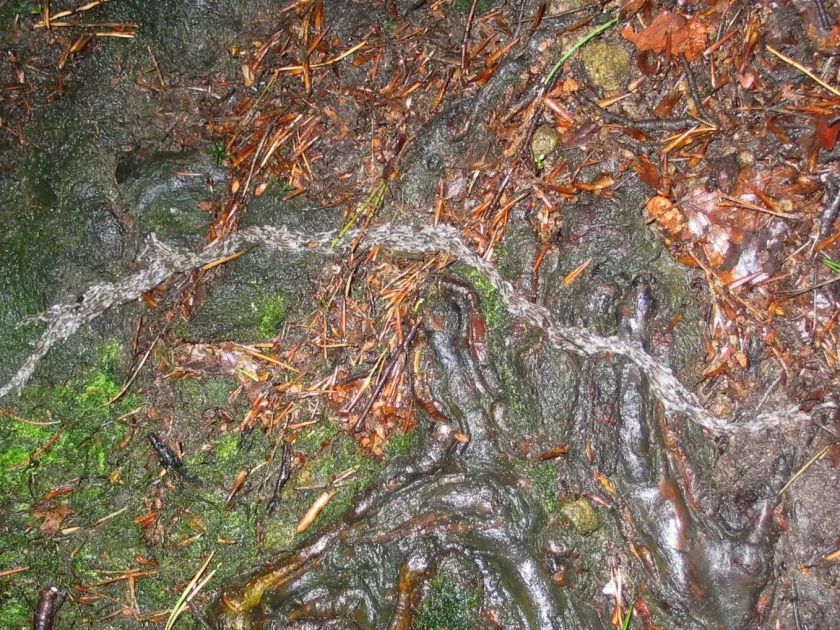
A unique biological trait of this species is the gregarious behavior of larvae, which often migrate in massive, snake-like columns across the soil surface in search of food.
The adults are relatively short-lived and focus primarily on reproduction, making them frequent visitors to moist growing media and decaying organic matter.
Sciarids are highly sensitive to microclimatic conditions, thriving in environments where high humidity and organic decomposition coincide.
What it damages
The primary damage is caused by the larval stage, which feeds on the organic components of the soil, fungi, and, when population density is high, the roots of living plants.
In greenhouses and nurseries, they cause significant injury to vegetable crops, ornamentals, and young seedlings by destroying fine root hairs and damaging the root neck.
Plants affected by larvae often exhibit stunted growth, chlorosis, and general weakness, significantly reducing the overall vigor and yield of the crop.
Root damage creates entry points for soil-borne pathogens like Fusarium and other fungal infections, which are often the primary cause of plant death following gnat infestation.
Severe infestations can lead to total crop failure, particularly in young plants that lack the root volume to compensate for the continuous feeding of the larvae.
When it appears
The activity of Sciara militaris begins in early spring, as temperatures rise, and continues throughout the growing season until the late autumn period.
In greenhouse settings, these pests are capable of continuous reproduction, potentially producing several overlapping generations depending on the temperature maintained.
Population spikes are frequently associated with periods of high irrigation and poor soil aeration, which favor the growth of the fungal mycelium the larvae feed upon.
The migration phenomenon, where larvae gather in large numbers, is often observed when the larval food supply is depleted or when conditions in the current substrate become unfavorable.
With an optimal developmental temperature range of 20–25 degrees Celsius, the life cycle can be completed in a matter of a few weeks.
Signs of infestation
The most visible sign of infestation is the presence of small black flies fluttering around the soil surface or near plant stems, indicating a breeding colony.
Visible wilting of plants during the day, even with sufficient soil moisture, suggests significant root damage caused by larval feeding.
Closer examination of the growing medium often reveals the presence of small, whitish, thread-like larvae that move actively when disturbed.
Discoloration or fungal growth on the surface of the soil is often a consequence of high larval activity and the environmental conditions they prefer.
The detection of the characteristic "army-like" migration of larvae across the surface is a definitive sign of an extremely high infestation level requiring urgent attention.
Control measures
Effective management begins with strict irrigation control, as maintaining a drier topsoil layer significantly reduces the success rate of egg-laying and larval survival.
- Using sterile, pathogen-free growing media for all propagation.
- Deploying yellow sticky traps to capture and monitor adult fly populations.
- Applying biological control agents, such as entomopathogenic nematodes (Steinernema spp.).
- Using targeted soil-drench insecticides when pest pressure exceeds economic thresholds.
- Maintaining high sanitation standards by removing decaying plant matter and surplus debris from greenhouse benches.
Consistent monitoring of traps allows for early detection of adult gnats, providing a window to apply control measures before a significant larval population is established.
Integrated Pest Management (IPM) practices, including the use of beneficial fungi, provide long-term stability and reduce the reliance on harsh chemical pesticides.
Taxonomy
- Latin name
- Sciara militaris
- Order
- Diptera (flies)
- Family
- Sciaridae
- EPPO code
- SCIAMI
Discussion
No discussions yet — be the first.