
Potato scab gnat
Pnyxia scabiei
Description
How to identify
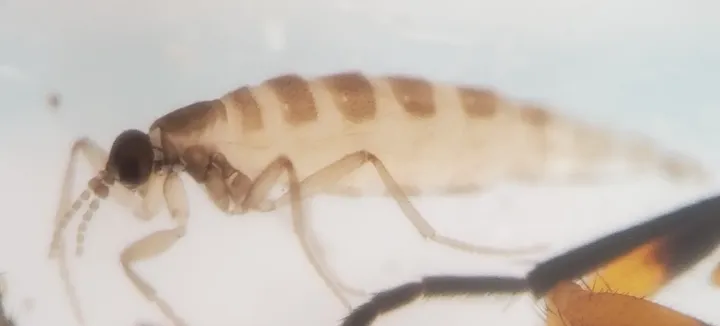
The potato scab gnat (Pnyxia scabiei) is a small insect belonging to the order Diptera and the family Cecidomyiidae (gall midges). The adults are typically 1 to 1.5 mm long.
Adult males are winged and capable of flight, which aids in their dispersal across fields, whereas females often have reduced or absent wings and live primarily in the soil or organic debris.
The larvae are legless, white to yellowish in color, and grow up to 2.5 mm in length. They possess poorly developed head capsules, which is a common characteristic of this family.
Due to their minute size, these insects are rarely noticed in the field until significant damage to the tubers becomes apparent during harvesting or storage.
The gnat thrives in moist, organic-rich environments, which provide both the necessary humidity for development and initial food sources for the emerging larvae.
What it damages
Potatoes are the primary host for this pest. The larvae feed on the tubers, creating tunnels in the skin and the outer layers of the flesh.
While potatoes are the main target, the pest can also attack other root vegetables like carrots, radishes, and beets if they are grown in infested soil.
The damage caused by the larvae disrupts the tuber's protective skin, providing entry points for various soil-borne pathogens and bacteria.
As a result, secondary infections such as soft rot quickly develop, causing the tubers to decay and become unsuitable for consumption or long-term storage.
Significant economic losses can occur in storage facilities if infested tubers are mixed with healthy ones, as the pests can move between potatoes in damp conditions.
Signs of infestation
The first signs of infestation are small, shallow pits or lesions on the tuber surface, which can easily be mistaken for common scab disease.
As the infestation progresses, these lesions expand into winding tunnels and cavities carved out by the feeding larvae beneath the skin.
Darkened, soft patches on the tuber are a clear indication of tissue decay resulting from bacterial infections triggered by the gnat's feeding activity.
If you inspect the surface of a stored potato, you may find the larvae themselves tucked within the cavities or associated with moist, decaying tissue.
The presence of an unpleasant odor and a slimy texture on the tuber surface often confirms that the damage has progressed from simple feeding to secondary rot.
Control measures
Crop rotation is the most effective cultural control method, as it breaks the pest's lifecycle; potato crops should not be planted in the same soil more than once every few years.
Deep plowing in the autumn helps to expose overwintering stages to harsh weather conditions, significantly reducing the population for the next growing season.
Rigorous sorting of tubers before storage is essential. All damaged or suspicious tubers must be removed to prevent the spread of the infestation within the storage bin.
Proper storage conditions, including a temperature range of 2-4°C and adequate ventilation, are critical to inhibit the development and activity of the gnats.
In cases of severe outbreaks, soil treatment with registered insecticides may be necessary, provided that the application complies with local environmental regulations and agricultural standards.
Taxonomy
- Latin name
- Pnyxia scabiei
- Order
- Diptera (flies)
- Family
- Sciaridae
- EPPO code
- PNYXSC
Discussion
No discussions yet — be the first.