


SKU #59808
·
37 views
VOEVODA
Wheat
Federal Agrarian Scientific Center of the South-EastUser rating
0 votes0% positive reviews
No ratings yet — be the first.
Type of Development
Spring wheat
Wheat Type
Soft wheat variety
Growing Season
80-90 days
Seed: mass 1.000 pcs seeds
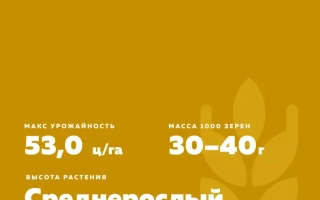
35-40 grams
About product

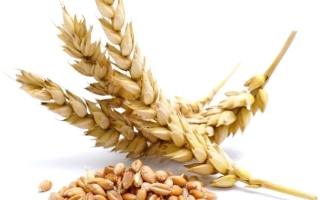
The 'Voevoda' soft spring wheat variety is a mid-season lutescent type created at the Scientific Research Institute of Agriculture of the South-East. It is characterized by a pyramidal spike of medium density with white, non-hairy awns and red elongated-oval grain with a medium groove. The mass of 1000 grains varies from 26 to 41 grams, while grain nativity is 809 g/l. The bush is semi-upright, th…
Type of Development
Spring wheat
Wheat Type
Soft wheat variety
Growing Season
80-90 days
Seed: mass 1.000 pcs seeds
35-40 grams
Description
The 'Voevoda' soft spring wheat variety is a mid-season lutescent type created at the Scientific Research Institute of Agriculture of the South-East. It is characterized by a pyramidal spike of medium density with white, non-hairy awns and red elongated-oval grain with a medium groove. The mass of 1000 grains varies from 26 to 41 grams, while grain nativity is 809 g/l. The bush is semi-upright, the straw is weakly developed, the leaf is green with a weak waxy coating and medium hairiness. The vegetative period lasts 75-88 days, ripening simultaneously with the 'Yugo-Vostochnaya 2' and 'Belyanka' varieties, but threshing occurs slightly later. Voevoda is distinguished by high resistance to a complex of diseases, including leaf and yellow rust, powdery mildew, brown rust, and bunt, as well as resistance to lodging, shedding, and pre-harvest sprouting of grains. The variety has excellent baking qualities, belonging to filler wheat, with crude gluten and protein content exceeding the indicators of the 'Yugo-Vostochnaya 2' variety (34.1% versus 27.2% and 15.4% versus 14.2% respectively). These characteristics ensure high grain quality and make the variety competitive in its cultivation zones. It is recommended for cultivation in the Volgograd and Saratov regions; the Voevoda variety demonstrates stable yield, with an average indicator of 11.8 c/ha in the region, with a productivity potential of up to 5.0 t/ha. Due to the combination of high disease resistance, good adaptation to climatic conditions, and high technological grain qualities, Voevoda is an economically viable choice for agricultural producers, ensuring significant yield growth and product quality.
Crop & resistance
Crop
Disease resistance
Specifications hover over for a hint about the specification
| Type of Development | |
|---|---|
|
Wheat Type
Wheat Type
Biologically hard wheat differs from soft wheat in its greater demand for soil fertility and agronomic conditions (especially regarding field cleanliness from weeds), lower drought resistance and plasticity, relatively weaker root development, especially nodal roots, and lower ti... |
|
| Growing Season | 80-90 days |
| Seed: mass 1.000 pcs seeds | 35-40 grams |
|
Grain: gluten content
Grain: gluten content
Raw gluten of grain is a hydrated protein and consists of water-insoluble protein fractions, as well as a small amount of starch, fats, and other substances firmly bound by proteins. Since gluten is primarily composed of proteins, its yield and quality depend on the quantity and... |
More than 30% |
| Resistance to lodging | |
| Potential Yield | 5-6 tons |
| Registration year | 2008 |
| Catalog | Catalog → Wheat |
| Manufacturer | Federal Agrarian Scientific Center of the South-East |
| Legal data |
Show · 9
|
| Country | Russia |
Store offers
Prices are updated on loadLoading offers…
Aggregator catalog: prices are collected automatically from store websites, normalized by AI and converted at the current exchange rate. Before ordering, confirm the price and availability on the store's website. This block is not indexed by search engines — the data is loaded after the page opens.
Not yet комментариев. Be the first!
Alternatives
Wheat seeds · similar varieties

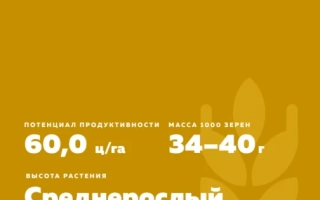


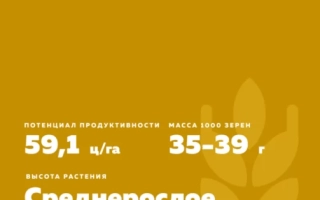


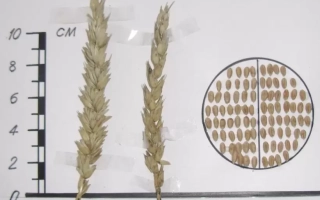
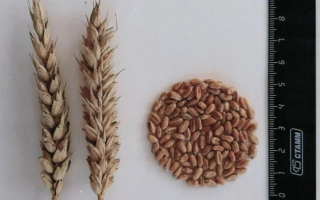
STOLYPINSKAYA
ФГБОУ ВО Омский государственный аграрный университет имени П.А. Столыпина
047 2 offers
47.55 € ≈ 2 446 ₴


See also
Often considered together with this variety





Recently viewed
Products you’ve viewed on this site
Reviews · 0