

SKU #59704
·
47 views
STOLYPINSKAYA
Wheat
ФГБОУ ВО Омский государственный аграрный университет имени П.А. СтолыпинаUser rating
0 votes0% positive reviews
No ratings yet — be the first.
Type of Development
Spring wheat
Wheat Type
Soft wheat variety
Growing Season
80-90 days
Seed: mass 1.000 pcs seeds
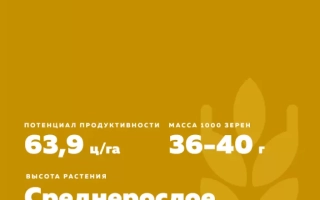
35-40 grams
Store offers · 2 from 2 stores
Prices are updated on loadLoading offers…
Available at: Лес и сад · UBC SHOP
Aggregator catalog: prices are collected automatically from store websites, normalized by AI and converted at the current exchange rate. Before ordering, confirm the price and availability on the store's website. This block is not indexed by search engines — the data is loaded after the page opens.
About product

Stolypinskaya soft spring wheat variety (Triticum aestivum L.) is a mid-early Lutescens type recommended for cultivation in the Ural and West Siberian regions, including Chelyabinsk, Omsk, and Kemerovo regions. The vegetative period is 78-89 days, maturing 2-3 days later than the variety 'Pamyati Azieva'. The plant is medium-height with a semi-erect bush, pyramid-shaped medium-density spike, and w…
Type of Development
Spring wheat
Wheat Type
Soft wheat variety
Growing Season
80-90 days
Seed: mass 1.000 pcs seeds
35-40 grams
Description
Stolypinskaya soft spring wheat variety (Triticum aestivum L.) is a mid-early Lutescens type recommended for cultivation in the Ural and West Siberian regions, including Chelyabinsk, Omsk, and Kemerovo regions. The vegetative period is 78-89 days, maturing 2-3 days later than the variety 'Pamyati Azieva'. The plant is medium-height with a semi-erect bush, pyramid-shaped medium-density spike, and white color. The 1000-grain mass varies from 35 to 44 grams, indicating good grain quality. The spike has a strong waxy bloom, contributing to resistance to unfavorable conditions.
Stolypinskaya is distinguished by its resistance to lodging, shattering, and grain germination on the root, as well as drought resistance at the level of standards. Average yield in the Ural region reaches 25.0 c/ha, in the West Siberian region — 30.6 c/ha, with maximum indicators up to 51.1 c/ha, confirming the high productivity of the variety. Flour-making qualities of the grain are good, making this variety valuable for agricultural production and processing.
However, the variety shows moderate susceptibility to certain diseases, such as bunt and brown rust, as well as susceptibility to root rots, powdery mildew, septoria, and bunt. In field conditions, stem rust infection is noted as weak. These features require attention when selecting agrotechnical measures for crop protection and ensuring a stable yield.
Stolypinskaya is distinguished by its resistance to lodging, shattering, and grain germination on the root, as well as drought resistance at the level of standards. Average yield in the Ural region reaches 25.0 c/ha, in the West Siberian region — 30.6 c/ha, with maximum indicators up to 51.1 c/ha, confirming the high productivity of the variety. Flour-making qualities of the grain are good, making this variety valuable for agricultural production and processing.
However, the variety shows moderate susceptibility to certain diseases, such as bunt and brown rust, as well as susceptibility to root rots, powdery mildew, septoria, and bunt. In field conditions, stem rust infection is noted as weak. These features require attention when selecting agrotechnical measures for crop protection and ensuring a stable yield.
Crop & resistance
Crop
Disease resistance
Specifications hover over for a hint about the specification
| Type of Development | |
|---|---|
|
Wheat Type
Wheat Type
Biologically hard wheat differs from soft wheat in its greater demand for soil fertility and agronomic conditions (especially regarding field cleanliness from weeds), lower drought resistance and plasticity, relatively weaker root development, especially nodal roots, and lower ti... |
|
| Growing Season | 80-90 days |
| Seed: mass 1.000 pcs seeds | 35-40 grams |
| Resistance to lodging | |
| Potential Yield | 5-6 tons |
| Registration year | 2017 |
| Catalog | Catalog → Wheat |
| Manufacturer | ФГБОУ ВО Омский государственный аграрный университет имени П.А. Столыпина |
| Legal data |
Show · 1
|
| Country | Russia |
Not yet комментариев. Be the first!
Alternatives
Wheat seeds · similar varieties





See also
Often considered together with this variety





Recently viewed
Products you’ve viewed on this site
Reviews · 0