


SKU #59393
·
42 views
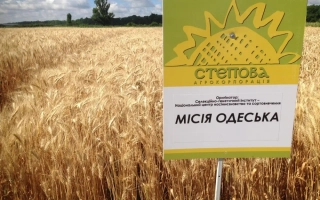
Mission Odessa
Wheat
OOO 'SEMENA ROSSII'User rating
0 votes0% positive reviews
No ratings yet — be the first.
Type of Development
Winter wheat
Wheat Type
Hard wheat
Growing Season
280-290 days
Plant; height
90-100 cm
Store offers · 1 from 1 stores
Prices are updated on loadLoading offers…
Available at: АгроКон · TDA Shop
Aggregator catalog: prices are collected automatically from store websites, normalized by AI and converted at the current exchange rate. Before ordering, confirm the price and availability on the store's website. This block is not indexed by search engines — the data is loaded after the page opens.
About product

Winter wheat 'Mission Odessa' is a high-yield variety with an intensive growth type and medium-early maturity. The vegetation period is 283-287 days, ensuring stable crop formation under various climatic conditions. The variety is characterized by average plant height of 95-104 cm and a pyramidal spike length of 9.2-10 cm with a white color and elongated grain shape. The mass of 1000 grains varies…
Type of Development
Winter wheat
Wheat Type
Hard wheat
Growing Season
280-290 days
Plant; height
90-100 cm
Description
Winter wheat 'Mission Odessa' is a high-yield variety with an intensive growth type and medium-early maturity. The vegetation period is 283-287 days, ensuring stable crop formation under various climatic conditions. The variety is characterized by average plant height of 95-104 cm and a pyramidal spike length of 9.2-10 cm with a white color and elongated grain shape. The mass of 1000 grains varies from 38 to 44 grams, indicating good quality seed material.
This variety is distinguished by high adaptability and resistance to adverse environmental factors. It possesses high frost and winter hardiness, as well as exceptional drought and heat tolerance, making it optimal for cultivation in steppe and forest-steppe zones. Disease resistance is at a medium level, which additionally contributes to yield stability. Productivity potential reaches 115-120 c/ha (11.5-12.0 t/ha), while the variety demonstrates crop stability even under unfavorable conditions.
Grain quality meets the requirements of strong wheats: crude protein content is 13.8-14.1%, gluten is 28.8-29.5%, and flour strength is in the range of 320-376 arbitrary units. These indicators make Mission Odessa attractive for the production of high-quality flour. To fully realize genetic potential, cultivation on high-yielding agronomic backgrounds with adherence to agronomic requirements is recommended. The sowing rate is 4.5-5.5 million grains per hectare, which ensures optimal plant development and high yield.
This variety is distinguished by high adaptability and resistance to adverse environmental factors. It possesses high frost and winter hardiness, as well as exceptional drought and heat tolerance, making it optimal for cultivation in steppe and forest-steppe zones. Disease resistance is at a medium level, which additionally contributes to yield stability. Productivity potential reaches 115-120 c/ha (11.5-12.0 t/ha), while the variety demonstrates crop stability even under unfavorable conditions.
Grain quality meets the requirements of strong wheats: crude protein content is 13.8-14.1%, gluten is 28.8-29.5%, and flour strength is in the range of 320-376 arbitrary units. These indicators make Mission Odessa attractive for the production of high-quality flour. To fully realize genetic potential, cultivation on high-yielding agronomic backgrounds with adherence to agronomic requirements is recommended. The sowing rate is 4.5-5.5 million grains per hectare, which ensures optimal plant development and high yield.
Crop & resistance
Crop
Disease resistance
Specifications hover over for a hint about the specification
| Type of Development | |
|---|---|
|
Wheat Type
Wheat Type
Biologically hard wheat differs from soft wheat in its greater demand for soil fertility and agronomic conditions (especially regarding field cleanliness from weeds), lower drought resistance and plasticity, relatively weaker root development, especially nodal roots, and lower ti... |
|
| Growing Season | 280-290 days |
| Plant; height | 90-100 cm |
| Seed: mass 1.000 pcs seeds | 35-40 grams |
|
Grain: gluten content
Grain: gluten content
Raw gluten of grain is a hydrated protein and consists of water-insoluble protein fractions, as well as a small amount of starch, fats, and other substances firmly bound by proteins. Since gluten is primarily composed of proteins, its yield and quality depend on the quantity and... |
25-30% |
| Potential Yield | 11-12 tons |
| Number of productive stems per hectare | 4.5-5.0 million pcs |
| Registration year | 2014 |
| Catalog | Catalog → Wheat |
| Manufacturer | OOO 'SEMENA ROSSII' |
| Legal data |
Show · 12
|
| Country | Russia |
Not yet комментариев. Be the first!
Alternatives
Wheat seeds · similar varieties






See also
Often considered together with this variety





Recently viewed
Products you’ve viewed on this site
Reviews · 0