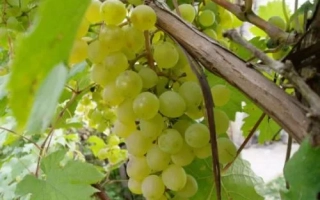
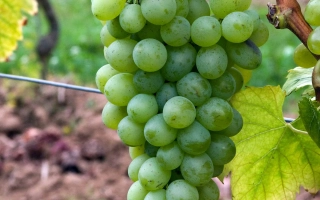
Sylvaner — a technical white grape variety originating from Central Europe, widely grown in Germany, Austria, and Alsace. This variety belongs to the Western European eco-geographical group and is characterized by medium-sized, light-green leaves with a golden tint and slight pubescence. The leaves are round with 3–5 lobes and wavy edges. Sylvaner clusters are small to medium-sized, cylindrical-conical, dense, with short stems, and the berries are light green, round, with a firm skin and characteristic large brown spots. The pulp is juicy and usually contains two seeds. Sylvaner ripens at a medium rate, exhibits high frost resistance, and has increased resistance to fungal diseases such as mildew and oidium. These qualities make it attractive to grape growers, as it requires fewer cultivation conditions and can successfully develop in diverse climatic zones, including those where other varieties, such as Riesling, may struggle. Due to these features, Sylvaner is widely used for producing high-quality dry white wines with a neutral but pleasant aroma. Although Sylvaner lacks the strong aromatic intensity and acidity characteristic of some other varieties, it is valued for its reliability and versatility. In Germany, it ranks third in planted area among white grape varieties, trailing only Riesling and Müller-Thurgau. It ripens earlier than Riesling, reducing the risk of damage from early frosts. These characteristics make Sylvaner a popular choice for grape growers seeking a stable and high-quality yield, as well as for producing wines with a delicate and balanced flavor, in demand on the market.