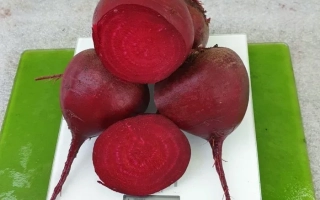
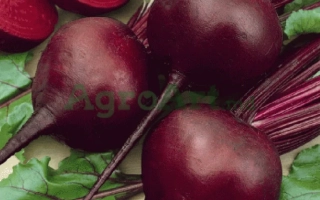
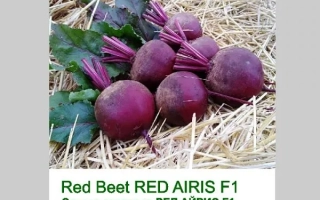
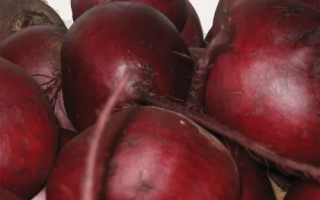
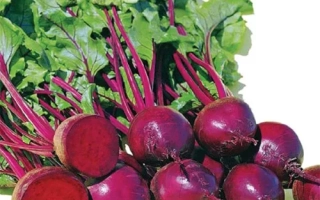
Cardinal F1 table beet is a mid-early hybrid with a vegetation period of 100 to 105 days, allowing it to be grown both on an industrial scale and on private plots. The roots are round, spherical, smooth and even, with dark red flesh and a burgundy hue, and rings practically do not form even under adverse weather conditions such as drought or sharp temperature fluctuations. The external color of the roots is also dark red, making them attractive for fresh consumption and processing.
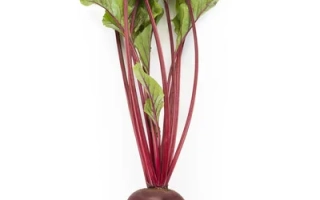
Cardinal F1 has a high sugar content — 14-15%, which is one of the best indicators among table beets. Thanks to this, the variety is widely used in cooking, canning, and pickling. The leaf rosette of the plant is small and vertically oriented, reaching a height of 33-40 cm. The beet tolerates high temperatures and drought well, and also exhibits resistance to powdery mildew and rhizoctonia, ensuring a stable yield and good root storage throughout the year.
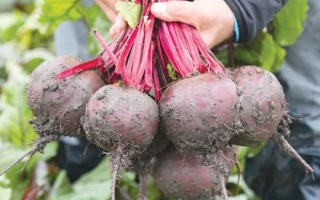
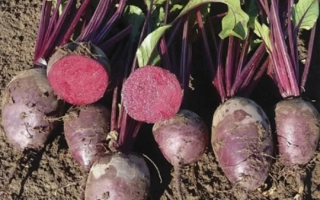
For successful cultivation, it is recommended to maintain optimal soil moisture and sow seeds from late April to early May at a rate of 2.0–2.2 grams per square meter, with row spacing of about 45 cm. The recommended plant density is 450-550 thousand seeds per hectare. The roots sink into the soil approximately halfway and are easy to harvest, which simplifies the harvesting process. All these characteristics make Cardinal F1 a great choice for those who value high quality, yield, and versatility of table beet.