


SKU #65139
·
31 views
GREENHOUSE
Radish
User rating
0 votes0% positive reviews
No ratings yet — be the first.
Growing Period
Spring
Registration year
1970
Store offers · 1 from 1 stores
Prices are updated on loadLoading offers…
Available at: Agro-market
Aggregator catalog: prices are collected automatically from store websites, normalized by AI and converted at the current exchange rate. Before ordering, confirm the price and availability on the store's website. This block is not indexed by search engines — the data is loaded after the page opens.
About product

A dependable variety for spring greenhouse cultivation with a long history of proven performance.
Growing Period
Spring
Registration year
1970
Description
Consistency for Greenhouse Environments
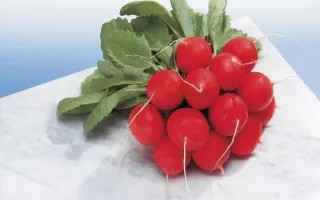
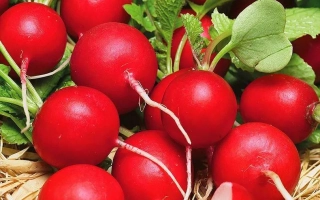
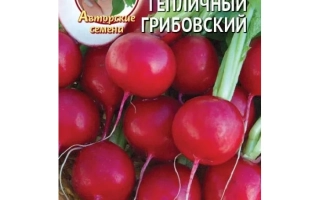
The 'Teplichny' radish is a benchmark of Russian selection, specifically engineered for the unique microclimate of protected growing environments. Developed by the Federal Research Center for Vegetable Growing and the 'Sortsemovoshch' Association, this variety has maintained its market relevance for decades, serving as a reliable staple for both commercial farmers and private greenhouse operators.
Agronomic Profile
The variety specializes in early spring production. Even under conditions of limited sunlight and moderate temperatures, 'Teplichny' exhibits remarkable plasticity. It consistently produces high-quality root crops that remain resistant to typical greenhouse stressors, such as moisture fluctuations and low light levels during early-season planting.
- Type: Stabilized variety adapted to regional climate zones.
- Growth Cycle: Spring cycle (early-market production).
- Origin: Developed by the Federal Research Center for Vegetable Growing, ensuring high varietal purity.
The reputation of 'Teplichny' is built on predictability. Unlike many modern hybrids that demand complex, high-input management, 'Teplichny' offers a reliable path to a marketable crop with lower risk profiles. This makes it a preferred choice for producers who prioritize stability and early market entry.
Video · 1 video
Suggest a video →Crop & resistance
Crop
Specifications hover over for a hint about the specification
|
Growing Period
Growing Period
For autumn-winter cultivation of radish, varieties with low branching and short growing period are preferable, which exhibit strong root growth under low light conditions. |
|
|---|---|
| Registration year | 1970 |
| Catalog | Catalog → Radish |
| Legal data |
Show · 3
|
| Country | Russia |
Not yet комментариев. Be the first!
Alternatives
Radish seeds · similar varieties


See also
Often considered together with this variety






Recently viewed
Products you’ve viewed on this site
Reviews · 0