


SKU #65145
·
36 views
Romans
Radish
User rating
0 votes0% positive reviews
No ratings yet — be the first.
Redis Type
Radish
Growing Period
Winter, Spring, Autumn
Maturation Period
20 - 25 days
Root vegetable; weight
40 - 50 grams
Store offers · 1 from 1 stores
Prices are updated on loadLoading offers…
Available at: Agro-market
Aggregator catalog: prices are collected automatically from store websites, normalized by AI and converted at the current exchange rate. Before ordering, confirm the price and availability on the store's website. This block is not indexed by search engines — the data is loaded after the page opens.
About product

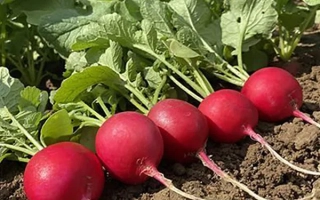
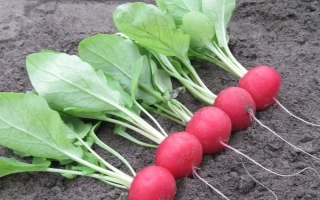
Romans radish is an early hybrid variety known for its rapid growth and stable yield. The maturation period is only 23-25 days, allowing for several fresh harvests throughout the year. The fruits feature a rich red-raspberry color, with a diameter of 4 to 6 cm and a weight of 40 to 50 grams. The root's interior is dense, ensuring excellent taste and an attractive appearance. Romans radish is not p…
Redis Type
Radish
Growing Period
Winter, Spring, Autumn
Maturation Period
20 - 25 days
Root vegetable; weight
40 - 50 grams
Description
Romans radish is an early hybrid variety known for its rapid growth and stable yield. The maturation period is only 23-25 days, allowing for several fresh harvests throughout the year. The fruits feature a rich red-raspberry color, with a diameter of 4 to 6 cm and a weight of 40 to 50 grams. The root's interior is dense, ensuring excellent taste and an attractive appearance. Romans radish is not prone to flowering, cracking, or deformed fruits, making it particularly valuable for cultivation in both open and closed ground during different seasons — winter, spring, and autumn.
For sowing, it is recommended to use soil with a fine-grained or powdery structure, planting seeds at a depth of about 1 cm. After sowing and watering, uniform seedlings appear within 2-4 days. Romans radish is undemanding in care, which reduces costs for agrotechnical operations and harvest collection. The sowing rate is 200-240 seeds per square meter, and the yield reaches 4-5 kg from the same plot.
In addition to high taste qualities, radish is a low-calorie product with a low glycemic index and low carbohydrate content. It is rich in vitamins C, group B, calcium, potassium, iron, and other beneficial microelements. Regular consumption of radish helps reduce the risk of diabetes, supports liver and heart health, improves digestion, and possesses anti-cancer properties.
For sowing, it is recommended to use soil with a fine-grained or powdery structure, planting seeds at a depth of about 1 cm. After sowing and watering, uniform seedlings appear within 2-4 days. Romans radish is undemanding in care, which reduces costs for agrotechnical operations and harvest collection. The sowing rate is 200-240 seeds per square meter, and the yield reaches 4-5 kg from the same plot.
In addition to high taste qualities, radish is a low-calorie product with a low glycemic index and low carbohydrate content. It is rich in vitamins C, group B, calcium, potassium, iron, and other beneficial microelements. Regular consumption of radish helps reduce the risk of diabetes, supports liver and heart health, improves digestion, and possesses anti-cancer properties.
Crop & resistance
Crop
Specifications hover over for a hint about the specification
| Redis Type | |
|---|---|
|
Growing Period
Growing Period
For autumn-winter cultivation of radish, varieties with low branching and short growing period are preferable, which exhibit strong root growth under low light conditions. |
|
|
Maturation Period
Maturation Period
Vegetation period from emergence to technical maturity 30-50 days. |
20 - 25 days |
|
Root vegetable; weight
Root vegetable; weight
Carrot roots vary in weight from 60-150 g, sometimes 300-500 g. |
40 - 50 grams |
|
Root vegetable; color
Root vegetable; color
Carrot root can be orange, red-orange, pink, yellow, white, purple. The intensity of color depends on the content of pigments. |
|
|
Recommended Density
Recommended Density
Optimal productivity is achieved at a planting density of 4000-5500 plants/ha. Possible planting scheme: 300-500x40-80 cm. |
2.0 - 2.5 million pcs/ha |
| Registration year | 2025 |
| Catalog | Catalog → Radish |
| Legal data |
Show · 1 |
| Country | Russia |
Not yet комментариев. Be the first!
Alternatives
Radish seeds · similar varieties




See also
Often considered together with this variety



Recently viewed
Products you’ve viewed on this site
Reviews · 0