


SKU #52650
·
69 views
ZORACHKA
Potato
User rating
0 votes0% positive reviews
No ratings yet — be the first.
Direction
Table Potato
Corm; shape
Oval, Oval elongated
Corm; skin color
Yellow
Corm; flesh color
Light Yellow
About product

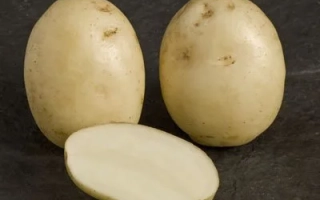
Zorachka — an early-maturing table potato variety of Belarusian selection, intended for cultivation on light and medium-grained soils, such as sandy loams and loose clays. The plant is semi-erect, low or medium height, with medium-sized green leaves and red-purple flowers. Tubers are oval or occasionally elongated, with smooth dark-yellow skin and light-yellow flesh. Eyes on the tubers are small a…
Direction
Table Potato
Corm; shape
Oval, Oval elongated
Corm; skin color
Yellow
Corm; flesh color
Light Yellow
Description
Zorachka — an early-maturing table potato variety of Belarusian selection, intended for cultivation on light and medium-grained soils, such as sandy loams and loose clays. The plant is semi-erect, low or medium height, with medium-sized green leaves and red-purple flowers. Tubers are oval or occasionally elongated, with smooth dark-yellow skin and light-yellow flesh. Eyes on the tubers are small and shallow, with an average single tuber mass ranging from 90 to 120 grams. Starch content in the flesh is 12.7–14.2%, which determines the tubers’ low susceptibility to breakdown.
The variety is characterized by high yield — from 254 to 316 centners per hectare — and good storability, reaching 96%. Zorachka is resistant to potato scab and nematodes, has moderate resistance to late blight, but is susceptible to certain viral diseases, including the Y-virus. Potatoes poorly tolerate drought, so careful attention to irrigation is required to avoid soil drying or overwatering. Adequate mineral nutrition increases the proportion of marketable tubers and overall yield.
The culinary qualities of this variety are high; Zorachka belongs to type AV, making it especially suitable for frying, salads, soups, and vegetable mixes. Due to its low susceptibility to breakdown, it is also well-suited for use as boiled young potatoes. Its simple agronomy and adaptability to various soil-climate conditions make this variety attractive for cultivation in different regions.
The variety is characterized by high yield — from 254 to 316 centners per hectare — and good storability, reaching 96%. Zorachka is resistant to potato scab and nematodes, has moderate resistance to late blight, but is susceptible to certain viral diseases, including the Y-virus. Potatoes poorly tolerate drought, so careful attention to irrigation is required to avoid soil drying or overwatering. Adequate mineral nutrition increases the proportion of marketable tubers and overall yield.
The culinary qualities of this variety are high; Zorachka belongs to type AV, making it especially suitable for frying, salads, soups, and vegetable mixes. Due to its low susceptibility to breakdown, it is also well-suited for use as boiled young potatoes. Its simple agronomy and adaptability to various soil-climate conditions make this variety attractive for cultivation in different regions.
Video · 2 videos
Suggest a video →Crop & resistance
Crop
Disease resistance
Pest resistance
Specifications hover over for a hint about the specification
|
Direction
Direction
Existing varieties and types of cabbage are grown for fresh consumption, long-term storage, and technical processing. |
|
|---|---|
| Corm; shape | |
| Corm; skin color | |
| Corm; flesh color | |
| Corm; skin structure | |
| Cormorant; eye depth | |
| Corm; mass | 50-130 grams |
| Starch Content | 12-13%, 13-14% |
| Registration year | 2013 |
| Catalog | Catalog → Potato |
| Legal data |
Show · 9
|
| Country | Russia |
Store offers
Prices are updated on loadLoading offers…
Aggregator catalog: prices are collected automatically from store websites, normalized by AI and converted at the current exchange rate. Before ordering, confirm the price and availability on the store's website. This block is not indexed by search engines — the data is loaded after the page opens.
Not yet комментариев. Be the first!
Alternatives
Seed potatoes · similar varieties




See also
Often considered together with this variety



Recently viewed
Products you’ve viewed on this site
Reviews · 0