


SKU #46435
·
118 views
Hungarian Ajancs
Plum
User rating
0 votes0% positive reviews
No ratings yet — be the first.
Type
Hungarian
Harvest Period (Calendar)
August (16–31 number), September (1–15th)
Cold Resistance
High
Disease Resistance
Moniliosis
Prices in stores
from2.63 €per seedling
pack from 2.63 € per 1 pcs
6 offers from 6 stores
Store offers · 6 from 6 stores
Prices are updated on loadLoading offers…
Available at: Biosad · Экосад · Кліома Сервіс · Панські Сади · Plodo Market · Сади Валерії
Aggregator catalog: prices are collected automatically from store websites, normalized by AI and converted at the current exchange rate. Before ordering, confirm the price and availability on the store's website. This block is not indexed by search engines — the data is loaded after the page opens.
About product

Plum variety Hungarian Ajancs — a Western European variety with a rich history, known since the 18th century. Medium-sized tree with a broad, round or spherical crown of medium density and foliage. Leaves are dark green, egg-shaped with wavy and serrated edges. Flowering is early, occurring in mid-late April. Self-sterile, requires pollinators, among which are recommended varieties such as Ekateri…
Type
Hungarian
Harvest Period (Calendar)
August (16–31 number), September (1–15th)
Cold Resistance
High
Disease Resistance
Moniliosis
Description
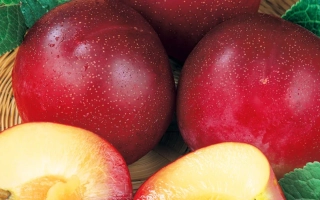
Plum variety Hungarian Ajancs — a Western European variety with a rich history, known since the 18th century. Medium-sized tree with a broad, round or spherical crown of medium density and foliage. Leaves are dark green, egg-shaped with wavy and serrated edges. Flowering is early, occurring in mid-late April. Self-sterile, requires pollinators, among which are recommended varieties such as Ekaterina, Renclod Green, Renclod Altana, Victoria, Anna Spet, Washington, and others. Trees begin fruiting on the 4th–5th year after planting and exhibit high yields, averaging 100–118 kg per mature tree, and up to 250 kg under favorable conditions. Fruits of Hungarian Ajancs are medium-sized, oval or egg-shaped with a rounded apex and medium-length pedicel. Color ranges from red-purple to dark blue with a waxy coating. Flesh is yellow-green, medium density, juicy, with good flavor, characterized by sugar content of 10–15%, and according to more precise data — up to 15.33%, and low acidity. Stone is semi-detachable, facilitating fruit use. Dry matter content in fruits reaches 16.98–23.89%, and vitamin C — up to 15.52 mg%. Ripening occurs in the third decade of August to September, fruits keep well for up to two weeks and are well suited for transport. Suitable for fresh consumption, as well as for technical processing, including drying and production of prunes. The Hungarian Ajancs tree is sufficiently cold-hardy and resistant to pests, though it may suffer from almond seed beetle, but is little damaged by fruitworm. For successful cultivation, regular watering, soil loosening, and preventive treatment against fruit rot are recommended. Wild apricot is often used as rootstock for seedlings, providing vigorous growth. Due to its qualities and high yield, this variety is popular in favorable climatic regions of Ukraine and Crimea, where it is successfully cultivated and valued for its tasty and versatile fruits.
Crop & resistance
Crop
Disease resistance
Pest resistance
Specifications hover over for a hint about the specification
| Type | |
|---|---|
| Harvest Period (Calendar) | August (16–31 number), September (1–15th) |
| Cold Resistance | |
| Disease Resistance | |
| Disease Resistance Level | |
| Pest Resistance | |
| Resistance to Pests Level | |
| Flowering Period (Days of the Year) | Early (May 2–10) |
| Yield (kg/tree) | Very High (>50 kg) |
| Fetal weight (grams) | Medium (21–35 g) |
|
Fruit Color
Fruit Color
The fruit color of tomato varieties is influenced by the combination of skin and flesh color. Some varieties have transparent skin, others — yellow. When combined differently, the fruits can acquire quite diverse colors. The fruit color is affected by pigments (lycopene) and thei... |
|
|
Fruit Shape
Fruit Shape
Modern tomato varieties have a diverse fruit shape: flat, flat-round, round, oval, elongated-oval, pear-shaped, plum-shaped, cube-shaped, and cylindrical. On poorly fertile soils and under unfavorable growing conditions, tomato fruits may take on a more rounded shape. |
|
| Flavor | |
| Acidity of juice (g/l) | |
| Meat Texture Consistency | |
| Pit Separation | |
| Assignment | |
| Soil Requirement | |
| Humidity Requirements | |
| Tree Growth Power | |
| Crown Shape | |
| Fruit Transportability | High (up to 10 days of storage and transportation) |
| Fruit firmness (storage duration in refrigerator) | |
| Fruit cracking resistance | |
| Registration year | 1928 |
| Catalog | Catalog → Plum |
| Country | Ukraine |
Not yet комментариев. Be the first!
Alternatives
Plum saplings · similar varieties




See also
Often considered together with this variety




Recently viewed
Products you’ve viewed on this site
Reviews · 0