

Pest · Lepidoptera (butterflies) · affects European plum, Plum, Fodder beet
Plum fruit moth
Grapholita funebrana
Description
How to identify
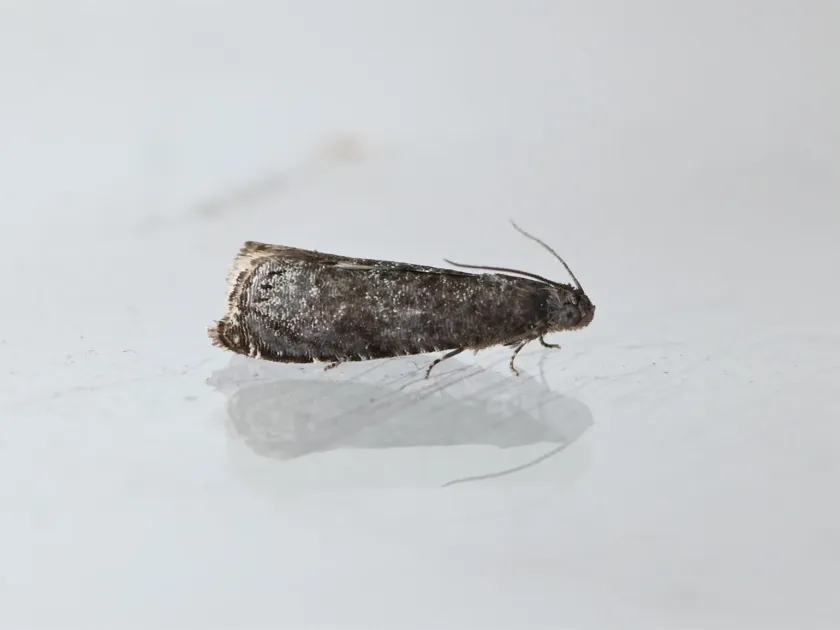
The plum fruit moth (Grapholita funebrana) belongs to the order Lepidoptera, family Tortricidae. The adult moth is small, with a wingspan of approximately 12–15 mm, characterized by dark brown wings with a subtle greyish sheen.
The larva, or caterpillar, undergoes several stages of growth. Initially, the larva is whitish, but as it matures, it develops a distinct pinkish-red color with a dark brown head, typically growing up to 12 mm in length.
Pupae are about 6–8 mm long and have a yellowish-brown coloration. They are securely protected within dense silken cocoons, which are usually hidden in bark crevices or plant debris, ensuring survival through winter.
The eggs of the moth are extremely tiny, oval in shape, and milky-white. The female typically lays them singly on the surface of young fruits, where they are often difficult to detect.
Overwintering occurs primarily in the final larval stage. These larvae spin tough cocoons in protected spots such as tree bark, soil organic matter, or even inside fruit storage containers, waiting for spring conditions.
What it damages
The primary host plants are stone fruits. While plums are the most frequently damaged, the pest also poses a significant threat to damsons, apricots, and occasionally peaches, making it a widespread orchard concern.
Larvae cause severe damage by feeding on the flesh of the fruit, specifically near the stone. This infestation leads to premature ripening and significant fruit drop, rendering the harvest useless for commercial purposes.
Infested fruits lose their quality rapidly. The entry points created by the larvae provide an easy pathway for secondary fungal infections, such as brown rot, which can destroy the remaining healthy fruit in the cluster.
In years with favorable climate conditions, this pest can devastate up to 90% of the crop if no control measures are implemented. The high reproductive rate of the species allows it to recover quickly after mild winters.
Economic damage is twofold: quantitative loss through dropped fruit and qualitative loss due to internal rot and the presence of gum exudation, which ruins the fruit surface and marketability.
When it appears
The flight of the adult moths typically begins in late spring, triggered by average daily temperatures rising above 15°C. This period often coincides with the conclusion of the blooming phase for most plum varieties.
The number of generations depends heavily on the local climate. In southern regions, the plum fruit moth can complete up to three generations annually, whereas in northern climates, it is restricted to one or two.
Moth activity, including mating and egg-laying, peaks during the dusk and twilight hours. They are highly sensitive to weather fluctuations, and activity significantly decreases during cool or rainy nights.
Larvae emerge from eggs within 7 to 10 days. This brief window is the most critical time for pest management because the larvae are exposed on the fruit surface before they burrow inside.
During the summer months, generations often overlap, meaning adults, eggs, and larvae may be present in the orchard simultaneously. This complexity makes consistent monitoring essential for effective management.
Signs of infestation
The first indicator of an infestation is the presence of small droplets of gum on the fruit skin. This is the result of the young larva's initial entry into the fruit tissue.
Affected plums often exhibit premature purplish coloration long before they are supposed to ripen. This abnormal coloring is a classic symptom of internal larval feeding and development.
When an infested plum is cut open, internal tunnels filled with larval excrement (frass) are clearly visible. The area around the stone is typically discolored, soft, and carries an unpleasant smell due to rot.
Premature fruit drop is a common sign in infested orchards. While many larvae may exit the fruit before it hits the ground, the damage itself serves as a clear indicator of a pest outbreak.
- Presence of gum droplets on the fruit surface.
- Premature ripening and abnormal fruit skin color.
- Internal tunnels and frass inside the fruit flesh.
Control measures
A successful defense strategy requires an integrated approach that combines biological, mechanical, and chemical methods. Proactive management is necessary to keep pest populations below the economic threshold.
Mechanical control focuses on removing and destroying infested fruit and fallen plums to prevent larvae from completing their life cycle. Scraping old bark from tree trunks can also reduce overwintering sites.
Chemical control should be timed to coincide with the period when larvae hatch from eggs, but before they enter the fruit. Once inside, the larvae are protected from systemic and contact insecticides.
Pheromone traps are highly recommended for monitoring. They allow orchardists to track the arrival of the moths precisely and apply treatments only when necessary, which is both cost-effective and environmentally friendly.
Biological alternatives, such as the use of egg parasitoids or bacteria-based biopesticides, are increasingly used in modern orchards. These methods provide effective control while preserving the balance of beneficial insects in the ecosystem.
Content graph
Connections · Plum fruit moth
Most often together:
Marketplace
Products · 16


Biology
Taxonomy
- Latin name
- Grapholita funebrana
- Order
- Lepidoptera (butterflies)
- Family
- Tortricidae
- EPPO code
- LASPFU
Community
Discussion
No discussions yet — be the first.