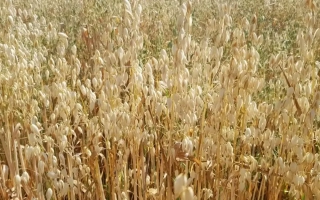
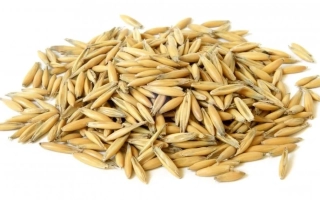
Spring oat variety Narymsky 943 is a medium-maturing variety bred by the method of multiple mass selection from the Dzen-Sin sample. This variety has been included in the State Register of Breeding Achievements since 1963 and is recommended for cultivation in the Western Siberia region. Narymsky 943 is characterized by awnless, short, and large white grains with a 1000-seed weight of 40 to 48 grams, as well as a semi-closed or spreading panicle containing up to 85 grains. The vegetative period is 85–90 days, making it a medium-maturing variety with high competitiveness even during long-term cultivation.
The variety is distinguished by high bushiness, which reduces its sensitivity to sowing rates and allows for effective utilization of high agro-background. Seeds have a dormancy period and are well-suited for mechanized harvesting and post-harvest processing, easily separating from oatgrass. Grain membranosity is 26–31%, and protein content ranges from 13.5–14.3%, making Narymsky 943 valuable for feed use. Average yield of the variety reaches 40–45 centners per hectare, and the 85–105 cm long straw is well-leafy.
Despite high drought resistance, the variety has medium resistance to pests and diseases. It is susceptible to ergot diseases, crown rust, bacterial burn, and stem rust, as well as damage from the grain moth. Seeds of the Narymsky 943 variety possess high purity (not less than 98%) and germination (not less than 92%), confirmed by high-quality harvest indicators of 2023. It is recommended for sowing in various regions of Western Siberia, including the Altai Krai, Kemerovo, Novosibirsk, Omsk, Tomsk, and Tyumen regions, as well as the autonomous okrugs of Yugra and Yamal-Nenets.