


SKU #68729
·
36 views
DANILA
Millet
User rating
0 votes0% positive reviews
No ratings yet — be the first.
Type of Sort
Sort
Resistance to lodging
High
Registration year
2012
About product

DANILA is a mid-season variety of cultivated millet (Panicum miliaceum L.), recommended for cultivation in the central steppe zone of the Orenburg region. It is characterized by a vegetation period of 70 to 110 days and a plant height of 60 to 100 cm. The variety belongs to the sanguineum type, featuring large, round red grains with a weight of 1000 grains ranging from 7.2 to 8.0 g. The panicle is…
Type of Sort
Sort
Resistance to lodging
High
Registration year
2012
Description
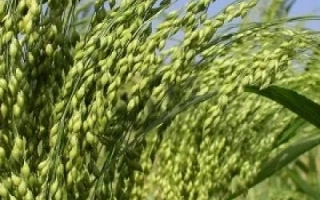
DANILA is a mid-season variety of cultivated millet (Panicum miliaceum L.), recommended for cultivation in the central steppe zone of the Orenburg region. It is characterized by a vegetation period of 70 to 110 days and a plant height of 60 to 100 cm. The variety belongs to the sanguineum type, featuring large, round red grains with a weight of 1000 grains ranging from 7.2 to 8.0 g. The panicle is compressed and weakly drooping, with branches pressed against the main axis, and lacks anthocyanin coloration of the glume.
DANILA is distinguished by high resistance to lodging and shattering, which contributes to crop preservation. Additionally, the variety is resistant to bunt, enhancing its value in terms of quality and cultivation reliability. The average yield in the region is about 12.1 c/ha, and in the central steppe zone of the Orenburg region - 13.7 c/ha, which is 1.4 c/ha higher than the standard variety Orenburgskoye 9. The maximum yield recorded in 2008 reached 28.2 c/ha.
The DANILA variety is widely used in agriculture for growing grain crops, thanks to its adaptability to climatic conditions and stable productivity. It is recommended for agronomic use in the Ural region, confirming its reliability and effectiveness in the agro-technologies of this region.
DANILA is distinguished by high resistance to lodging and shattering, which contributes to crop preservation. Additionally, the variety is resistant to bunt, enhancing its value in terms of quality and cultivation reliability. The average yield in the region is about 12.1 c/ha, and in the central steppe zone of the Orenburg region - 13.7 c/ha, which is 1.4 c/ha higher than the standard variety Orenburgskoye 9. The maximum yield recorded in 2008 reached 28.2 c/ha.
The DANILA variety is widely used in agriculture for growing grain crops, thanks to its adaptability to climatic conditions and stable productivity. It is recommended for agronomic use in the Ural region, confirming its reliability and effectiveness in the agro-technologies of this region.
Crop & resistance
Disease resistance
Specifications
| Type of Sort | |
|---|---|
| Resistance to lodging | |
| Registration year | 2012 |
| Catalog | Catalog → Millet |
| Legal data |
Show · 2 |
| Country | Russia |
Store offers
Prices are updated on loadLoading offers…
Aggregator catalog: prices are collected automatically from store websites, normalized by AI and converted at the current exchange rate. Before ordering, confirm the price and availability on the store's website. This block is not indexed by search engines — the data is loaded after the page opens.
Not yet комментариев. Be the first!




See also
Often considered together with this variety


SARATOVSKOYE ZHELTAYE
Federal Agrarian Scientific Center of the South-East
034 1 offer
48.52 € ≈ 2 499 ₴


Recently viewed
Products you’ve viewed on this site
Reviews · 0