


SKU #74420
·
57 views
Veresnevyy
Lupin
User rating
0 votes0% positive reviews
No ratings yet — be the first.
Plant Height
150–250
Usage
On green feed
Registration year
2003
About product

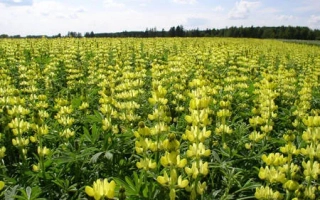
A high-yielding lupin variety designed to maximize green forage production.
Plant Height
150–250
Usage
On green feed
Registration year
2003
Description
Technical Profile of the 'Veresnevyi' Lupin
The 'Veresnevyi' lupin is a variety developed by the National Scientific Center 'Institute of Agriculture of the NAAS' (Ukraine). It is specifically bred for high-volume green mass production, making it an essential component for efficient livestock forage systems. The variety is characterized by high adaptability to local soil and climatic conditions.
Morphological Architecture and Growth Dynamics
- Structural traits: Plants reach heights of 150–250 cm. This robust physical stature allows for maximum photosynthetic efficiency and superior biomass yield per hectare.
- Early development: The variety demonstrates vigorous growth rates during the vegetative stage, enabling a more flexible and reliable green fodder schedule.
- Root system: The deep and extensive root structure serves as an effective nitrogen-fixing mechanism, improving soil nitrogen content and preparing the field for subsequent crops in the rotation cycle.
Field Application and Economic Utility
The technical focus of 'Veresnevyi' is on providing high-protein green fodder. Its height facilitates efficient mechanized harvesting, significantly reducing downtime and losses during the cutting process. By leveraging the plant's natural nitrogen-fixing capabilities, farmers can effectively reduce their dependence on mineral fertilizers, leading to lower production costs. Its balanced growth and high yields make it a strategic choice for agricultural operations looking to optimize their forage quality while simultaneously improving long-term soil health.
Crop & resistance
Crop
Specifications
| Plant Height | 150–250 |
|---|---|
| Usage | |
| Registration year | 2003 |
| Catalog | Catalog → Lupin |
| Legal data |
Show · 1
|
| Country | Ukraine |
Store offers
Prices are updated on loadLoading offers…
Aggregator catalog: prices are collected automatically from store websites, normalized by AI and converted at the current exchange rate. Before ordering, confirm the price and availability on the store's website. This block is not indexed by search engines — the data is loaded after the page opens.
Not yet комментариев. Be the first!






See also
Often considered together with this variety









Recently viewed
Products you’ve viewed on this site
Reviews · 0