


SKU #71899
·
64 views
Lupin Nadezhda
Lupin
User rating
0 votes0% positive reviews
No ratings yet — be the first.
Usage
Cover Crop
Green Mass Yield (t/ha)
3.47
Registration year
2004
Prices in stores
from1.26 €per 1 kg
pack from 1.26 € per 1 000 g
1 offer from 1 store
Store offers · 1 from 1 stores
Prices are updated on loadLoading offers…
Available at: Fermershop
Aggregator catalog: prices are collected automatically from store websites, normalized by AI and converted at the current exchange rate. Before ordering, confirm the price and availability on the store's website. This block is not indexed by search engines — the data is loaded after the page opens.
About product

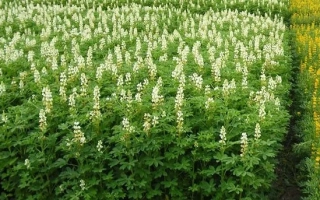
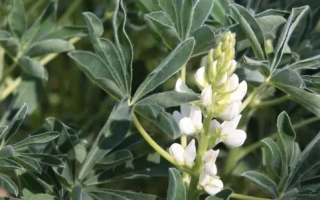
Lupin "Nadezhda" – a narrow-leaf variety (Lupinus angustifolius L.), early-maturing and included in the state register of the Western Siberian region. Medium-height plant, semi-upright, determinate, with dark green leaves and lilac-white flowers, yellow boat tip. Pod of medium size, grain white without ornamentation. Vegetative period is 83-87 days, and the mass of 1000 seeds is in the low-medium…
Usage
Cover Crop
Green Mass Yield (t/ha)
3.47
Registration year
2004
Description
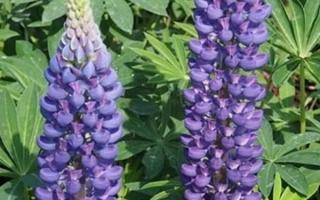
Lupin "Nadezhda" – a narrow-leaf variety (Lupinus angustifolius L.), early-maturing and included in the state register of the Western Siberian region. Medium-height plant, semi-upright, determinate, with dark green leaves and lilac-white flowers, yellow boat tip. Pod of medium size, grain white without ornamentation. Vegetative period is 83-87 days, and the mass of 1000 seeds is in the low-medium range.
"Nadezhda" is distinguished by good yield of dry matter – 34.7 c/ha, exceeding the standard Crystal by 1.7 c/ha. Seeds give about 15.0 c/ha, matching the established level. The plant is resistant to root rots and shows weak susceptibility to fusarium wilt of seedlings.
In terms of agronomic properties, the lupin has a powerful root system penetrating to a depth of 1.5-2 meters. This promotes active lifting of nutrients from lower soil layers and loosening of the soil, improving its oxygen saturation. Organic nitrogen-containing substances accumulate in the roots, and the lupin effectively absorbs phosphorus compounds, converting inaccessible phosphates for other crops into an accessible form. Thanks to these properties, it is a valuable cover crop and predecessor for plants requiring high nitrogen, potassium, and phosphorus content.
For mastering poor podzolic and sandy soils with increased acidity, annual lupin is especially suitable. The plant can be sown at the end of July-mid-August after harvesting potatoes, cabbage, or green crops, but optimally – early spring on moist soil. The obtained vegetative mass is mowed and crushed, returning nitrogen, potassium, and phosphorus rich to the soil, thereby improving its fertility for subsequent crops.
"Nadezhda" is distinguished by good yield of dry matter – 34.7 c/ha, exceeding the standard Crystal by 1.7 c/ha. Seeds give about 15.0 c/ha, matching the established level. The plant is resistant to root rots and shows weak susceptibility to fusarium wilt of seedlings.
In terms of agronomic properties, the lupin has a powerful root system penetrating to a depth of 1.5-2 meters. This promotes active lifting of nutrients from lower soil layers and loosening of the soil, improving its oxygen saturation. Organic nitrogen-containing substances accumulate in the roots, and the lupin effectively absorbs phosphorus compounds, converting inaccessible phosphates for other crops into an accessible form. Thanks to these properties, it is a valuable cover crop and predecessor for plants requiring high nitrogen, potassium, and phosphorus content.
For mastering poor podzolic and sandy soils with increased acidity, annual lupin is especially suitable. The plant can be sown at the end of July-mid-August after harvesting potatoes, cabbage, or green crops, but optimally – early spring on moist soil. The obtained vegetative mass is mowed and crushed, returning nitrogen, potassium, and phosphorus rich to the soil, thereby improving its fertility for subsequent crops.
Video · 1 video
Suggest a video →Crop & resistance
Crop
Disease resistance
Specifications
| Usage | |
|---|---|
| Green Mass Yield (t/ha) | 3.47 |
| Registration year | 2004 |
| Catalog | Catalog → Lupin |
| Legal data |
Show · 1
|
| Country | Russia |
Not yet комментариев. Be the first!





See also
Often considered together with this variety







Recently viewed
Products you’ve viewed on this site
Reviews · 0