


SKU #71898
·
65 views
Rainbow
Lupin
User rating
0 votes0% positive reviews
No ratings yet — be the first.
Usage
Cover Crop
Plant Height
50-120
Registration year
2005
Prices in stores
from226.67 €per 1 kg
pack from 0.68 € per 3 g
1 offer from 1 store
Store offers · 1 from 1 stores
Prices are updated on loadLoading offers…
Available at: Цибулинка
Aggregator catalog: prices are collected automatically from store websites, normalized by AI and converted at the current exchange rate. Before ordering, confirm the price and availability on the store's website. This block is not indexed by search engines — the data is loaded after the page opens.
About product

An ideal green manure crop for rapid soil fertility restoration and natural nitrogen enrichment.
Usage
Cover Crop
Plant Height
50-120
Registration year
2005
Description
An Effective Tool for Soil Restoration
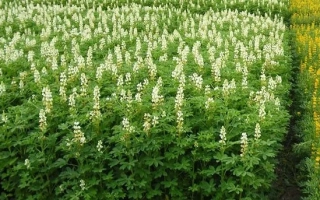
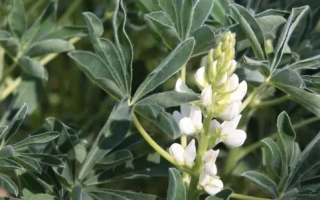
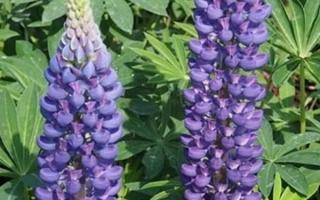
The «Raduzhny» lupine is a selection developed by the V.R. Williams All-Russian Research Institute of Forage, specifically designed for the intensive restoration of soil fertility and the improvement of physical-chemical soil properties. Unlike fodder varieties, this seed stock is focused on maximizing biomass accumulation for green manure purposes.
Agrotechnical Features
- Plant Height: 50–120 cm, allowing for the rapid formation of substantial green mass for incorporation into the soil.
- Biological Activity: The well-developed root system actively loosens compacted soil horizons, enhancing aeration and moisture infiltration.
- Nitrogen Fixation: Through symbiosis with nodule bacteria, the variety efficiently enriches the soil with readily available nitrogen, reducing the need for synthetic fertilizers for subsequent crops.
Practical Usage Scenarios
Farmers utilize «Raduzhny» to address specific agricultural challenges. The primary scenario is its use in crop rotation to rejuvenate depleted soils. It is typically sown on fields with low humus content or following crops that significantly exhaust the soil. Incorporating the green mass during the flowering phase provides the soil with organic matter equivalent to substantial manure applications, without the risks of introducing weeds or pathogens.
Due to its high competitiveness against weeds, «Raduzhny» is often employed as a biological herbicide: dense planting suppresses weed growth, effectively cleaning the field before winter grain sowing. Consistent growth rates enable predictable scheduling, which is critical during short growing seasons.
Crop & resistance
Crop
Specifications
| Usage | |
|---|---|
| Plant Height | 50-120 |
| Registration year | 2005 |
| Catalog | Catalog → Lupin |
| Legal data |
Show · 1
|
| Country | Russia |
Not yet комментариев. Be the first!





See also
Often considered together with this variety






Recently viewed
Products you’ve viewed on this site
Reviews · 0