


SKU #71421
·
56 views
BEZENCHUKSKY 9
Brome Grass
User rating
0 votes0% positive reviews
No ratings yet — be the first.
Assignment
Feed, Pasture, For Hay
Type
Perennial
Registration year
1956
About product

Bezzostoy Kosteets «Bezenchuksky 9» – a perennial rhizomatous grass reaching up to 1.5–2 m in height, distinguished by high yield and valuable fodder properties. The variety was created through multiple selections from local steppe forms and belongs to the steppe ecological group. The bush is upright or semi-spreading, with a predominance of fruiting stems; rhizomes are of medium length, and leaf…
Assignment
Feed, Pasture, For Hay
Type
Perennial
Registration year
1956
Description
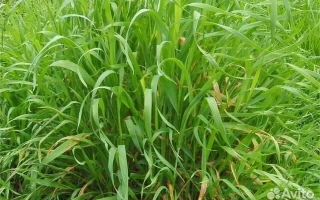
Bezzostoy Kosteets «Bezenchuksky 9» – a perennial rhizomatous grass reaching up to 1.5–2 m in height, distinguished by high yield and valuable fodder properties. The variety was created through multiple selections from local steppe forms and belongs to the steppe ecological group. The bush is upright or semi-spreading, with a predominance of fruiting stems; rhizomes are of medium length, and leaf blades are dark green, often hairless. The inflorescence is a panicle 15–20 cm long, with large spikelets, widely lanceolate grains, and dark gray or purple seeds.
The variety's soil preferences include loose loamy sand and loam soils, where it achieves its highest yields. With irrigation, green mass yield is 350–400 c/ha; without irrigation, 200–250 c/ha; hay – 25–65 c/ha; and seeds – from 3 to 10 c/ha. The variety is resistant to fungal and bacterial diseases, as well as viral infections, possesses good drought resistance, and high winter hardiness.
«Bezenchuksky 9» is widely used in field grass seeding as a fodder crop due to its high nutritional value: 1 kg of green mass contains 0.21 fodder units, and the same volume of hay contains 0.48 units and 51 g of digestible protein. The variety is suitable for creating cultural pastures, grassing of hay meadows, and long-term pastures; it recovers quickly after mowing and withstands two weeks of flooding. Due to its high productivity over four years, it remains in demand in agronomy across the Central Non-Chernozem Zone, Middle Volga, Siberia, and Kazakhstan.
The variety's soil preferences include loose loamy sand and loam soils, where it achieves its highest yields. With irrigation, green mass yield is 350–400 c/ha; without irrigation, 200–250 c/ha; hay – 25–65 c/ha; and seeds – from 3 to 10 c/ha. The variety is resistant to fungal and bacterial diseases, as well as viral infections, possesses good drought resistance, and high winter hardiness.
«Bezenchuksky 9» is widely used in field grass seeding as a fodder crop due to its high nutritional value: 1 kg of green mass contains 0.21 fodder units, and the same volume of hay contains 0.48 units and 51 g of digestible protein. The variety is suitable for creating cultural pastures, grassing of hay meadows, and long-term pastures; it recovers quickly after mowing and withstands two weeks of flooding. Due to its high productivity over four years, it remains in demand in agronomy across the Central Non-Chernozem Zone, Middle Volga, Siberia, and Kazakhstan.
Crop & resistance
Crop
Specifications hover over for a hint about the specification
| Assignment | |
|---|---|
|
Type
Type
Galia (Galia) type — relatively new, of Israeli origin, although there are indications that this variety may originate from Spain. The fruits of this type are round or oval, weighing about 1 kg. The surface is smooth, covered with a delicate, connected netting, turning yellow whe... |
|
| Registration year | 1956 |
| Catalog | Catalog → Brome Grass |
| Legal data |
Show · 3
|
| Country | Russia |
Store offers
Prices are updated on loadLoading offers…
Available at: Свое Фермерство · VVStroi
Aggregator catalog: prices are collected automatically from store websites, normalized by AI and converted at the current exchange rate. Before ordering, confirm the price and availability on the store's website. This block is not indexed by search engines — the data is loaded after the page opens.
Not yet комментариев. Be the first!
Alternatives
Brome Grass · similar varieties


See also
Often considered together with this variety




Recently viewed
Products you’ve viewed on this site
Reviews · 0