


SKU #62323
·
36 views
CABERNÉ AZOS
Grape
SCFSCVVUser rating
0 votes0% positive reviews
No ratings yet — be the first.
Usage Group
Technical
Ripening Period
Late
Cold Resistance
High (up to -24°C)
Yield
High
Store offers · 1 from 1 stores
Prices are updated on loadLoading offers…
Available at: Agro-market
Aggregator catalog: prices are collected automatically from store websites, normalized by AI and converted at the current exchange rate. Before ordering, confirm the price and availability on the store's website. This block is not indexed by search engines — the data is loaded after the page opens.
About product

Caberné AZOS is a technical grape variety developed in Russia at the Anapa Regional Experimental Station for Viticulture and Enology in the late 1960s by crossing Cabernet Sauvignon with the phylloxera-resistant variety Dzhemete. The bushes are vigorous, with large five-lobed leaves; the upper surface is dark green and netted-veined, while the lower surface is covered with dense hairy indumentum.…
Usage Group
Technical
Ripening Period
Late
Cold Resistance
High (up to -24°C)
Yield
High
Description
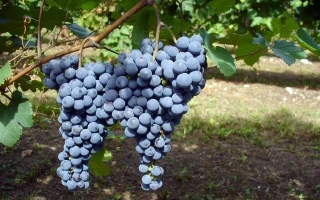
Caberné AZOS is a technical grape variety developed in Russia at the Anapa Regional Experimental Station for Viticulture and Enology in the late 1960s by crossing Cabernet Sauvignon with the phylloxera-resistant variety Dzhemete. The bushes are vigorous, with large five-lobed leaves; the upper surface is dark green and netted-veined, while the lower surface is covered with dense hairy indumentum. The flowers are hermaphroditic, which promotes good fruit set. The vine ripens well, and produces a large number of suckers. The clusters have a cylinder-conical shape, with an average weight of 250-300 grams; they are loose to medium density. The berries are medium-sized, round, dark blue with a firm skin and juicy flesh possessing a characteristic berry-like aftertaste. The juice from the berries is not colored. The variety belongs to mid-late or late ripening types. It is distinguished by high yield — up to 120-130 centners per hectare, while the berries reach a sugar content of 17-19 g per 100 cm³ and acidity of about 8.8 g/dm³. Caberné AZOS has good resistance to phylloxera and fungal diseases, as well as cold hardiness down to -26°C, making it suitable for cultivation in various climatic conditions, including the Krasnodar Krai. The level of winter hardiness is comparable to the Cabernet-Sauvignon variety. This variety is widely used for the production of dry table wines, in particular in Russia, where the wine "Light Veil" is made from it. Due to the combination of high yield, disease and frost resistance, as well as the quality characteristics of the berries, Caberné AZOS is a valuable variety for winemaking, providing stable and quality raw material for red and white wines.
Crop & resistance
Crop
Disease resistance
Pest resistance
Specifications hover over for a hint about the specification
| Usage Group | |
|---|---|
|
Ripening Period
Ripening Period
It takes 70-100 days until pepper reaches flowering stage, 130-160 days until technical fruit ripeness, and 135-180 days until physiological ripeness. |
Late |
| Cold Resistance | |
|
Yield
Yield
Overall bulb harvest per unit area. Depends on both onion variety characteristics and agronomic practices, fertilizers, and irrigation. Under optimal growing conditions, an onion yield of 100 tons per hectare and above is not considered record-breaking. |
High |
| Bush Growth Power | |
| Flower Type | |
| Bunch Size | Medium (300–500 g) |
| Berry Size | Medium (2–5 g) |
| Berry Color | |
| Sugar Content | Average (16–20%) |
| Zoning | |
| Assignment | |
| Registration year | 2002 |
| Catalog | Catalog → Grape |
| Manufacturer | SCFSCVV |
| Legal data | |
| Country | Russia |
Not yet комментариев. Be the first!
Alternatives
Grapevine saplings · similar varieties




See also
Often considered together with this variety


Recently viewed
Products you’ve viewed on this site
Reviews · 0