


SKU #3493
·
301 views
Apple Early Bolognaev
Apple
User rating
0 votes0% positive reviews
No ratings yet — be the first.
Type of Sort
Summer apple variety
About product

A summer variety developed at the Far Eastern Research Institute of Agriculture by A. V. Bolognaev and K. L. Stefanov through crossing the varieties 'Aborigen' with 'Amur Red' in 1972. It passed State Testing in Primorsky Krai and southern regions of Khabarovsk Krai. Here it demonstrated sufficient cold hardiness and resistance to scald on elevated cultivation sites. In terms of fruit size and ta…
Type of Sort
Summer apple variety
Description
A summer variety developed at the Far Eastern Research Institute of Agriculture by A. V. Bolognaev and K. L. Stefanov through crossing the varieties 'Aborigen' with 'Amur Red' in 1972. It passed State Testing in Primorsky Krai and southern regions of Khabarovsk Krai. Here it demonstrated sufficient cold hardiness and resistance to scald on elevated cultivation sites. In terms of fruit size and taste quality, it closely resembles medium-late early ripening varieties of the 'Moscow Pear' type.
The tree is fast-growing with a narrow-pyramidal crown of moderate density; branches grow at a sharp angle and are straight. The bark on the trunk and scaffold branches of young trees is initially burgundy, but darkens and turns gray with age. Fruit formation type — simple and compound clusters.
Shoots are of medium length and thickness, straight, dark red. Buds are small, pressed, hairy. Leaves are medium-sized, egg-shaped, short-tapered, with finely serrated edges, medium-length and thickness petioles, hairy. Fruit buds are medium-sized, hairy, elongated.
Flowers are medium-sized, small-cup-shaped, pinkish with a weak fragrance. Stamens are positioned above the pistils.
Fruits are medium-sized for local standards, small for general standards (average weight 54 g, maximum 98 g), round and regular in shape. Skin is tender, smooth, shiny. Color during harvest maturity is whitish or slightly greenish-yellow; covering color is in the form of a striped, slightly blurred blush with numerous faint gray spots. Peduncle is medium-length and thickness, straight, fitting into a small, obtuse-conical, narrow cup. Calyx does not fall off, half-open. Receptacle is small, narrow, ribbed. Core is medium-sized, heart-shaped, chambers partially closed, medium-sized.
Flesh is white, medium density, juicy, tender, slightly fibrous, with a slightly acidic-sweet taste. The fruit contains: dry matter — 14.6-17.2%, total sugar — 11.9-16.4%, titratable acids — 0.51-0.71%, ascorbic acid — 11.04-21.8 mg/100g. Primary use of the variety — fresh consumption.
Harvesting period — August 1-10. Fruits can be stored fresh for 15 days. Fruit attachment is satisfactory.
Self-sterile. Good pollinators — 'Amur Harvest', 'Nadezhny', 'Augustovskoe Dalnevostochnoe'.
Begins fruiting in the 3-4th year after grafting, commercial production — in the 5-6th year. Annual yield, from age 6-12 years, averages 50-75 centners/ha. Resistant to scab and monilial scald.
Advantages of the variety: earliest fruit ripening with good taste quality, resistance to scab, relatively satisfactory cold hardiness and scald resistance of trees.
Disadvantages of the variety: small fruit size, short consumption period, limited tree longevity; requires grafting into the crown of a highly cold-hardy and scald-resistant scaffold-forming variety to extend productive life.
The variety is used in interspecific crosses to develop summer table apple varieties.
Video · 1 video
Suggest a video →Crop & resistance
Crop
Disease resistance
Specifications
| Type of Sort | |
|---|---|
| Catalog | Catalog → Apple |
Store offers
Prices are updated on loadLoading offers…
Aggregator catalog: prices are collected automatically from store websites, normalized by AI and converted at the current exchange rate. Before ordering, confirm the price and availability on the store's website. This block is not indexed by search engines — the data is loaded after the page opens.
Not yet комментариев. Be the first!
Alternatives
Apple saplings · similar varieties





See also
Often considered together with this variety

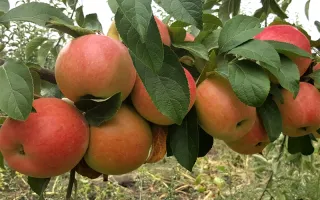


Golden Kurish Renet (Winter Golden Renet, Zolotarevka, Zolotorovsky Renet, Rogulevka)
01.3K 1 offer
4.24 € ≈ 217 ₴


Recently viewed
Products you’ve viewed on this site
Reviews · 0