

Disease · fungal · affects Lettuce, Red clover
Especially harmful
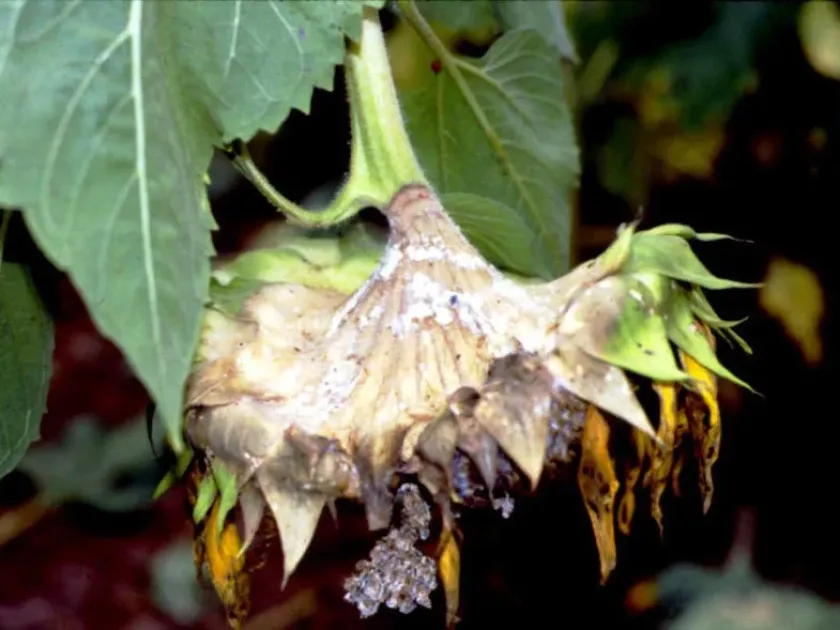
White mold of sunflower head
White mold of sunflower head
Description
Symptoms
The first symptoms appear on the back of the flower head as water-soaked, brownish spots that rapidly expand and turn into soft, rotting lesions.
Over time, a dense, white, cotton-like mycelium covers the infected area, which eventually develops into black, irregular sclerotia within the decaying tissue.
The internal tissues of the sunflower head are destroyed by the fungal growth, causing the structure to lose its integrity and crumble prematurely.
Seeds within the infected head are often shriveled, discolored, or completely destroyed, making them unsuitable for harvest or future planting.
In cases of high humidity, the rot can spread from the head to the upper part of the stalk, leading to stem breakage and the total collapse of the sunflower plant.
Pathogen
The causative agent of white mold in sunflower heads is the fungus Sclerotinia sclerotiorum. This is a polyphagous pathogen capable of infecting hundreds of plant species, including garden lettuce and red clover.
The fungus survives in the soil by producing sclerotia—hard, black survival structures that can remain viable for several years, waiting for ideal conditions to germinate.
The infection spreads primarily through airborne ascospores released from apothecia in the soil, which then colonize the moist, flowering sunflower heads.
Once the spores land on the plant tissue, they germinate and form mycelium that secretes enzymes to break down plant cell walls, leading to tissue decay.
Due to its high environmental adaptability and wide host range, Sclerotinia is considered one of the most difficult pathogens to manage in modern agriculture.
Conditions for development
Prolonged periods of high humidity and rainfall during the flowering stage are the primary drivers for white mold outbreaks in sunflower fields.
Moderate temperatures ranging from +15°C to +25°C provide the perfect conditions for the pathogen to thrive and spread rapidly across the crop.
Poor air circulation within dense canopy structures prevents the rapid drying of heads after rainfall, maintaining a humid microclimate favored by the fungus.
The presence of high inoculum levels in the soil, accumulated from previous susceptible crops, significantly increases the risk of head infection.
Late-season rainfall events often exacerbate the spread of the disease, as they occur exactly when the sunflower heads are most susceptible to colonization.
Why it matters
White mold can cause devastating yield losses, sometimes exceeding 50% of the total harvest if environmental conditions favor the pathogen.
The disease severely impacts seed quality, reducing oil content and germination rates, which compromises the economic value of the produce.
Infected fields lead to a massive increase in soil inoculum, posing a long-term threat to subsequent crop rotations on the same piece of land.
Mechanical harvesting becomes difficult and inefficient because infected heads are fragile, leading to significant seed losses during the combine pass.
Farmers often incur high costs for fungicide applications and are forced to adjust their planting strategies to minimize the risk of recurring infection.
Protection
Crop rotation is the most effective cultural practice; avoiding sunflowers for at least 5 years after susceptible crops like canola or beans is highly recommended.
Fungicide application during the early flowering stage is crucial to prevent spore germination and protect the vulnerable sunflower head tissues.
Maintaining appropriate plant density helps improve airflow within the canopy, reducing the moisture retention that supports fungal growth.
Deep plowing can help bury sclerotia deeper in the soil, though this practice must be balanced with soil conservation efforts.
- Selection of resistant or tolerant sunflower hybrids.
- Control of weeds that act as alternative hosts for Sclerotinia.
- Balanced nutrient management to promote plant health.
- Sanitation practices to remove infected debris from the field.
In brief
2
Affects crops
Biology
Pathogens and affected parts
Affected plant parts
whole plant
Content graph
Affects crops · 2
Reference
Connections · White mold of sunflower head
Most often together:
Marketplace
Products · 41








Community
Discussion
No discussions yet — be the first.