
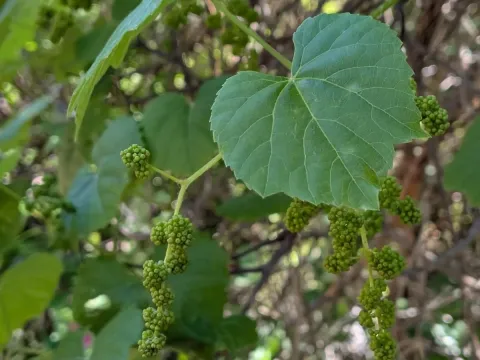
California wild grape
Vitis californica
California wild grape (Vitis californica) is a deciduous vine native to the western United States, belonging to the Vitaceae family. It naturally inhabits riparian corridors, canyons, and foothill areas, showcasing its remarkable adaptability to local ecosystems.
What the section contains
California wild grape
The plant thrives in full sun but can tolerate partial shade, provided it receives sufficient warmth for proper wood maturation. It is known for its vigor and ability to climb tall support structures, reaching significant heights in optimal conditions.
It prefers well-drained, deep soils. While it exhibits good drought tolerance once established, consistent moisture during the initial growth phase significantly boosts its overall vitality and leaf density.
Botanically, it features broad, rounded leaves that provide dense cover. The foliage turns spectacular shades of yellow and orange in the autumn, making it a highly desirable species for ornamental vertical gardening.
In terms of agricultural use, while its fruits are small and not typically cultivated for wine production, the species is valued for its hardiness, erosion control potential, and its role as a pollinator-friendly plant in native landscapes.
Powdery mildew (Erysiphe necator) is the primary fungal threat to Vitis californica, especially in humid climates or areas with poor air circulation around the vine.
Leafhoppers and spider mites are common pests that may infest the foliage during hot, dry summer months, leading to leaf stippling and reduced photosynthetic efficiency.
In some regions, the plant may also be susceptible to fungal cankers that affect older woody stems, often caused by improper pruning practices or physical damage.
Integrated pest management strategies should focus on maintaining adequate spacing between vines and removing diseased tissue to prevent the spread of fungal spores.
Providing optimal growing conditions, such as proper watering and avoiding nitrogen over-fertilization, helps the vine build resistance against typical secondary infections and pest pressures.