
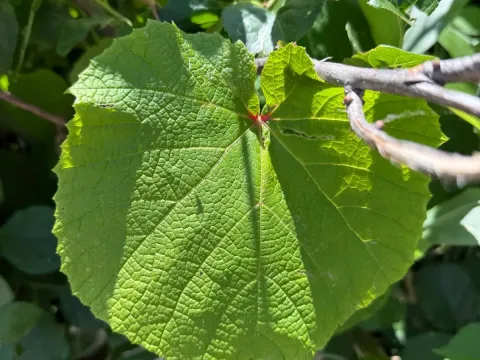
Amur grape
Vitis amurensis
The Amur grape (Vitis amurensis) is a deciduous woody vine belonging to the Vitaceae family, native to the Amur River region in East Asia. It is highly regarded for its exceptional cold tolerance and vigor.
What the section contains
Amur grape
This species is specifically adapted to climates with long, cold winters, often surviving temperatures as low as -40 degrees Celsius. It requires full sunlight to produce quality fruit and prefers well-drained, slightly acidic to neutral soils.
As a climbing plant, Vitis amurensis uses tendrils to scale structures such as trellises, arbors, or fences. It is an excellent choice for vertical gardening, providing both ornamental foliage and edible, nutritious berries.
Agricultural management includes dormant season pruning to maintain vine health and prevent excessive sap flow in the spring. Mulching around the base is recommended to maintain soil moisture levels during the peak of the summer heat.
The economic value of this crop extends to winemaking, as its fruit contains high levels of acids and sugars, providing a unique flavor profile to products made from its grapes.
A mature Amur grape vine can be highly productive, yielding between 15 and 30 kilograms of fruit annually when cultivated on a sturdy supporting structure with proper sun exposure.
While naturally resistant to many common vineyard diseases like downy mildew, it can still be affected by localized outbreaks if air circulation around the canopy is poor.
Typical insect pests include various species of leaf-eating caterpillars and spider mites, which can be managed with standard horticultural maintenance and regular plant inspection.
The harvest period typically occurs in mid-to-late autumn, once the clusters have turned dark blue and the sugar content has reached its optimal level for processing or consumption.