
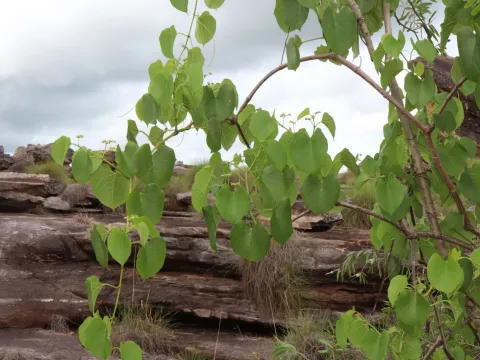
Cissus adnata
Cissus adnata
Cissus adnata is a vigorous perennial climbing vine belonging to the Vitaceae family. It is native to the tropical regions of Asia, specifically extending from India through Indochina to the Philippines, thriving in forested areas.
What the section contains
Cissus adnata
Botanically, the species is distinguished by its scandent stems and tendrils that allow it to scale tree trunks or structures efficiently. The leaves are typically cordate or ovate, often featuring pubescent textures that assist in water retention within its humid native ecosystem.
The climate requirements for this culture are strictly tropical. It demands high humidity levels and constant warmth, typically between 20°C and 30°C. It is highly sensitive to cold stress and cannot survive in frost-prone climates.
When selecting a site for cultivation, rich, well-draining soil is essential. Water management is critical; while the plant requires consistent moisture, excessive irrigation without proper drainage will inevitably lead to root system degradation.
Agricultural techniques involve providing adequate vertical support systems to mimic its natural environment. Regular pruning is recommended to encourage branching and prevent the vine from becoming excessively invasive in limited cultivation spaces.
The primary utility of Cissus adnata lies in its historical application in indigenous ethnomedicine. It is widely recognized for its wound-healing properties, which are derived from specific phytochemicals present in its leaves and succulent stems.
Harvesting procedures involve selective picking of healthy, fully developed leaves and tender aerial shoots. Mechanical harvesting is generally not applicable, so hand-picking remains the standard method to maintain raw material quality.
Post-harvest management requires immediate drying in shaded, airy environments to prevent moisture-induced decomposition. Maintaining the integrity of the plant tissues during the drying phase is crucial for preserving the concentration of active medicinal compounds.
Storage should be conducted in climate-controlled conditions where humidity is minimized. Even minor exposure to moisture can cause rapid microbial proliferation, rendering the harvest unsuitable for pharmaceutical production.
In a non-medicinal context, harvesting is effectively synonymous with maintenance pruning. Removing excess biomass ensures that the plant does not expend unnecessary energy, allowing it to focus on vegetative development during the primary growing season.