
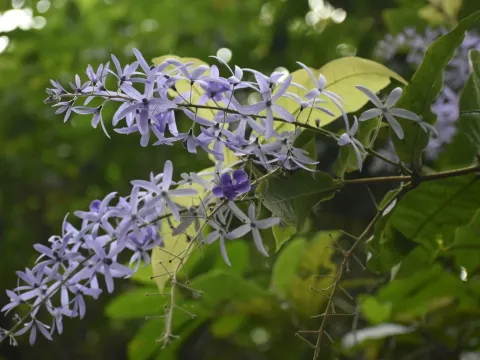
Petrea volubilis
Petrea volubilis
Petrea volubilis, commonly known as the purple wreath or Queen's wreath, is a woody vine belonging to the Verbenaceae family. It is native to tropical regions of Central and South America, where it thrives in humid and warm environments under bright light.
What the section contains
Petrea volubilis
This species requires high levels of ambient light to bloom effectively but should be protected from direct, scorching afternoon sun. It is highly sensitive to frost and cold winds, making it suitable for outdoor gardening primarily in tropical and subtropical climate zones.
For optimal development, the plant requires a nutrient-rich, well-draining soil mixture. The substrate should be kept consistently moist but never waterlogged. Poor drainage is the leading cause of decline in cultivated specimens, as the root system is prone to rot.
Botanically, Petrea is characterized by rough, sandpaper-like leaves and magnificent racemes of star-shaped flowers. The plant's visual appeal is enhanced by persistent sepals that remain on the vine long after the petals have fallen, providing a lasting floral display.
In ornamental horticulture, Petrea volubilis is highly valued for vertical landscaping applications. It is frequently trained to cover pergolas, trellises, and garden fences, serving as a rapid-growing feature that provides significant visual impact during its peak blooming periods.
Spider mites represent a major threat to this vine, particularly in greenhouse or indoor environments where humidity levels are insufficient. These pests can rapidly infest the foliage, causing stippling and eventual yellowing of the leaves if not treated promptly.
Scale insects and mealybugs are frequently observed on the stems and undersides of leaves. Regular inspections are necessary to detect these pests early, allowing for targeted control using horticultural oils or systemic insecticides compatible with tropical flora.
Root rot is the most serious physiological threat to Petrea volubilis, usually caused by overwatering or soil compaction. Symptoms typically include wilting of the leaves, stunted growth, and the eventual collapse of the main vine stems due to tissue decay.
Nutrient deficiencies, particularly chlorosis caused by insufficient iron or magnesium, can occur if the soil pH becomes too alkaline. Applying chelated micronutrients can resolve these issues, ensuring the plant maintains its vibrant green foliage color.
Cultural control remains the best defense against pests and diseases. Providing adequate spacing, ensuring proper airflow around the canopy, and maintaining a strict, moderate watering schedule are essential practices for cultivating healthy, vigorous Petrea vines.