
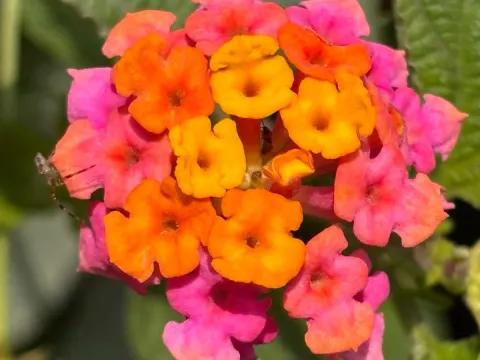
Lantana camara
Lantana horrida
Lantana camara is a perennial shrub belonging to the Verbenaceae family. Originally native to the tropical regions of the Americas, this plant has become widespread across various warm climates globally due to its remarkable adaptability.
What the section contains
Lantana camara
The plant requires full sun exposure to thrive and produce its signature vibrant flower clusters. Lack of sufficient light results in leggy growth and significantly diminished flower production, making light management a top priority.
Soil preferences involve well-drained, nutrient-rich substrates with a slightly acidic to neutral pH. Proper drainage is crucial, as the plant is highly susceptible to root diseases if left in waterlogged soil conditions.
Climate requirements for this species are strictly tropical or subtropical. Lantana cannot survive frost, meaning it must be treated as an annual or a containerized plant that is moved indoors during cold seasons in temperate regions.
Good agricultural practices include consistent moisture levels during the growing season and regular pruning. Pruning is essential for maintaining the shape of the shrub and encouraging dense, healthy foliage development throughout the year.
Whiteflies and spider mites are the most common pests that afflict Lantana camara, particularly in dry and hot conditions where they can quickly infest the foliage.
Mealybugs also pose a significant threat to the plant, hiding in leaf axils and stems, which leads to stunted growth and the potential spread of viral pathogens.
Fungal diseases such as root rot frequently occur due to poor drainage and high humidity levels, which create an environment conducive to pathogen proliferation.
Leaf spot diseases are often observed in dense plantings with poor air circulation, necessitating strict sanitation practices and the removal of affected plant debris.
Due to its high reproductive capacity and rapid growth, Lantana camara is classified as a serious invasive weed in many parts of the world, requiring careful control to protect local biodiversity.