
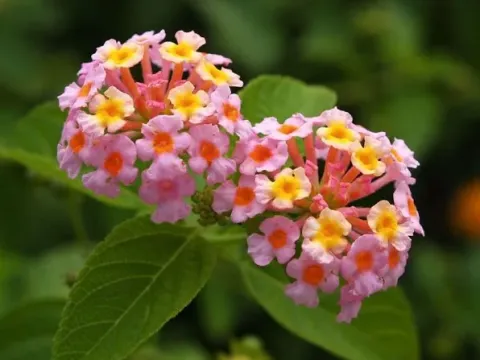
Lantana hybrids
Lantana hybrids
Propagation of Lantana hybrids is most commonly achieved through cuttings, performed in late winter or early spring. Seed propagation is practiced less frequently because the seeds require long stratification and germinate unevenly.
What the section contains
Lantana hybrids
For cuttings, select healthy semi-hardwood shoots about 10 centimeters long. Plant them in a light, nutrient-rich substrate amended with perlite to ensure aeration for the root system.
When sowing seeds, plant them in containers during February or March, maintaining a soil temperature of approximately 20–22 degrees Celsius. High air humidity and regular ventilation of the seedbeds are mandatory.
Seedlings should be pricked out after the appearance of the first two true leaves. Young plants should only be transferred to open ground once the risk of nighttime frost has completely passed.
A critical stage in agronomic management is pinching the tips of the shoots in young plants; this stimulates active branching and contributes to the formation of a denser, bushier crown later on.
Lantana hybrid is a heat-loving crop from the Verbenaceae family, cultivated as an annual or container plant in temperate climates. The optimal temperature for active growth is 20–25 degrees Celsius.
The plant is extremely demanding regarding light. To ensure full blooming and the development of intense flower colors, Lantana requires direct sunlight for at least 6–8 hours daily.
The crop has moderate soil requirements. It prefers well-drained, fertile loams with a neutral or slightly acidic pH. Waterlogging in the root zone is fatal to the plant.
Watering should be regular, especially during the peak flowering phase, but it is vital to avoid oversaturating the soil. During hot periods, mulching is recommended to prevent the root zone from drying out.
Apply fertilizer using complex mineral blends with low nitrogen content to promote blooming rather than vegetative growth. Excess nitrogen results in a loss of floral quality and decorative appeal.
The primary pests affecting the crop in both greenhouses and open fields are spider mites and whiteflies. These pests multiply rapidly under dry and hot conditions.
To control these insect pests, apply systemic insecticides and acaricides. Preventive spraying of the plants with water is also recommended to increase local air humidity.
Powdery mildew is the most common disease occurring when ventilation is poor or humidity is excessive. It manifests as a whitish, dusty coating on the leaf surfaces.
Root rots can arise from improper watering techniques and the use of heavy, poorly aerated soil mixes. Treatment involves replanting in fresh substrate and applying appropriate fungicides.
Viral diseases, such as leaf mosaic, are rare, yet if symptoms are detected, affected specimens must be destroyed immediately to prevent the spread of the pathogen to healthy plants.
In ornamental gardening, the harvest consists of the flowers, which maintain freshness for a significant duration. Cutting should be performed in the morning hours when the blooms are half-open.
To sustain prolonged blooming, it is necessary to regularly deadhead spent flowers; this prevents seed formation and redirects the plant's energy toward forming new flower buds.
In regions with cold winters, plants grown in open ground should be dug up in autumn and moved to a room with a temperature of 10–12 degrees to preserve the root system until next season.
Autumn pruning of the shoots prepares the plant for the dormant period by reducing the moisture evaporation surface area and simplifying storage in confined spaces.
Utilizing Lantana as an ornamental hanging plant requires monitoring shoot length, which can reach up to one meter, so pruning must be carried out as needed throughout the growing season.