
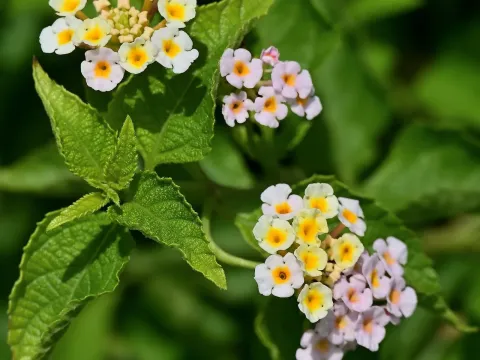
Lantana
Lantana L.
Lantana (Latin: Lantana L.) is a diverse genus of evergreen shrubs and herbaceous plants belonging to the Verbenaceae family. Originating from tropical and subtropical regions of the Americas, the plant has become a popular species globally due to its remarkable ornamental properties.
What the section contains


Lantana
Botanically, Lantana is distinguished by its rough, hairy leaves and clusters of small, brightly colored flowers that often transition through different shades of yellow, orange, and red as they mature. The species can grow into dense bushes, reaching significant heights in optimal climates.
The climate requirements for Lantana are strictly defined by its tropical origin. The crop demands full sun exposure and warm temperatures throughout its development. It is highly intolerant of frost, necessitating protective measures or indoor overwintering in temperate geographic zones.
Soil management for Lantana involves providing well-drained, nutrient-rich soil. Drainage is the most critical factor, as stagnant moisture leads to rapid root decay. Periodic fertilization is recommended to support continuous flowering throughout the growing season.
Regarding its economic use, Lantana is primarily managed in ornamental horticulture, landscaping, and container gardening. While it serves as an excellent nectar source for pollinators, it is often classified as a serious invasive weed in tropical countries due to its robust growth and spread.
Typical plant health issues for Lantana include infestations by whiteflies, aphids, and spider mites, especially in dry greenhouse conditions. Fungal diseases such as powdery mildew may occur if air circulation is insufficient or humidity levels remain consistently high.