
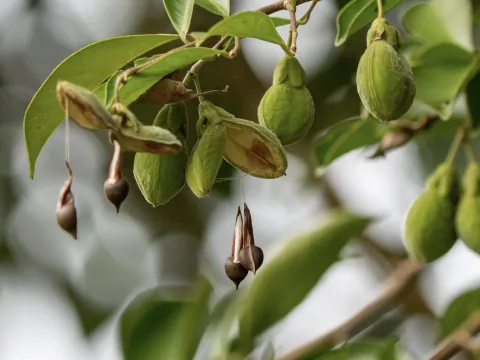
Aquilaria
Aquilaria Lam.
Aquilaria (Aquilaria Lam.) is a genus of evergreen trees belonging to the Thymelaeaceae family. Naturally distributed across the tropical regions of Southeast Asia, these trees are highly valued for their ability to produce aromatic resin under specific conditions.
What the section contains
Aquilaria
The cultivation of Aquilaria requires a tropical climate with temperatures consistently between 20 and 30 degrees Celsius. High humidity and well-distributed rainfall throughout the year are essential for healthy growth and robust biomass development.
These trees prefer deep, fertile, and well-drained soils. While they can tolerate various soil textures, they are highly sensitive to waterlogging, which can cause root rot and systemic weakness, making site selection crucial before planting.
In terms of management, young saplings need partial shade to thrive during their initial developmental stages. As the trees mature, they require consistent monitoring for nutrient levels, with organic fertilization playing a key role in promoting growth and resilience.
The core of Aquilaria agriculture is the induction of resin production. Because the valuable 'oud' resin is a stress-induced defense mechanism against fungal infection, growers use specific inoculation techniques to trigger this process in the tree trunks.
The yield of Aquilaria is measured by the quality and quantity of resin-infused heartwood. The production cycle is extensive, typically requiring a waiting period of 7 to 15 years after the inoculation process is completed to ensure optimal resin maturity.
Yield depends heavily on the effectiveness of the inoculation technology and the biological compatibility between the tree species and the fungi used. High-grade resin is extremely valuable, making the efficiency of the conversion process a top economic priority.
Harvesting techniques involve precision logging or selective extraction of resinous sections of the tree. Experienced harvesters ensure that the extraction method maximizes resin recovery while maintaining the longevity of the individual tree.
Regular assessments of the trees are conducted to determine the optimal harvest time. Advanced analytical methods allow growers to evaluate the density of the resin inside the wood, ensuring that only high-quality product reaches the market.
Consistency in yield is achieved through meticulous documentation of growth patterns and resin formation rates. This allows for sustainable management of the plantation and continuous production cycles over decades.
Aquilaria plantations face several threats, with leaf-eating insects being the most common. Caterpillar infestations, if not managed promptly, can lead to severe defoliation, hindering the tree's ability to photosynthesize and produce resin.
Phytophthora root rot is a major threat to the survival of Aquilaria, especially in poorly drained soil conditions. This soil-borne pathogen can cause rapid tree decline, requiring strict irrigation management and the use of fungicides when necessary.
Invasive weeds compete for nutrients and water, especially in younger plantations. Implementing an effective weed control strategy, including mulching and manual clearing, is essential to ensure that the trees do not suffer from nutrient deficiencies.
Bacterial diseases can also infect the tree, particularly through open wounds created during maintenance or pruning. Maintaining clean tools and applying protective sealants to cut surfaces are standard practices to prevent the entry of unwanted pathogens.
Effective biosecurity protocols, including the sourcing of certified disease-free seeds and saplings, are critical to prevent the introduction of major pests and diseases that could lead to significant financial losses in the long term.