
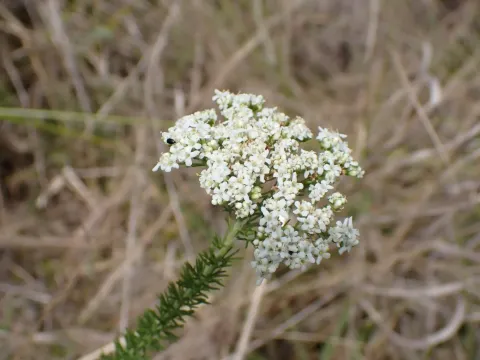
Selago corymbosa
Selago corymbosa
Selago corymbosa is typically propagated through seeds or stem cuttings. Sowing is best performed in the spring into a well-draining, lightweight medium to avoid saturation.
What the section contains
Selago corymbosa
For cutting propagation, semi-hardwood or green stems are selected in late summer. They should be rooted in a sandy-peat mix under controlled humidity and indirect lighting conditions.
Transplanting into the permanent garden site should occur only after all risks of frost have passed. The plant requires a location that provides ample sunlight throughout the day.
Care must be taken when transplanting, as the root system is sensitive to disturbance. Maintaining the root ball intact during the movement is highly recommended for survival.
Planting density is crucial for health; ensuring enough space between individual plants promotes the air circulation necessary to keep the foliage dry and healthy.
Selago corymbosa belongs to the Scrophulariaceae family and is native to South Africa. It is highly adapted to warm, dry environments and sunny slopes.
The soil must have excellent drainage characteristics, such as a rocky or sandy loam texture. Heavy or clay-heavy soils are generally unsuitable without significant amendments.
Watering requirements are moderate. The soil should be allowed to dry slightly between waterings, as the plant is prone to root rot if left in constantly damp soil conditions.
In cooler climates, the plant acts as a tender perennial or an annual. It requires protection or winter storage in a greenhouse where temperatures do not drop below freezing.
Optimal growth temperatures range from 20 to 25 degrees Celsius. The species appreciates good ventilation and is quite resilient to heat once established in the ground.
While relatively robust, the plant can be susceptible to common pests such as aphids and spider mites, especially if the air is too stagnant or dry.
Fungal diseases, specifically root rot, pose the greatest threat to Selago corymbosa. These issues are almost always the result of overwatering or poor drainage systems.
Regular monitoring of the underside of leaves is necessary to catch early signs of pest infestation. Early intervention with insecticidal soaps can mitigate further damage.
Powdery mildew may occasionally appear if humidity levels remain high without adequate airflow. Keeping the foliage dry during irrigation helps prevent this issue.
Ensuring the plant is not crowded by other species reduces the risk of competitive stress and helps maintain a healthy environment for the plant to thrive.
The plant is mainly harvested for its ornamental value. Stems with flower clusters are collected during peak bloom for use in fresh bouquets or dried flower arrangements.
For dried use, stems should be hung upside down in a cool, dark, and dry environment. This process preserves the structure and appearance of the delicate flowers.
Pruning is an essential maintenance task that should be done after flowering. Cutting back spent blooms encourages the plant to maintain a compact, bushy habit.
Seed harvesting occurs when the seed heads turn brown and begin to dry naturally on the stalk. The seeds should be collected and cleaned of debris immediately.
Storage of the cleaned seeds must be in dry, cool, and dark conditions to maintain viability for the subsequent growing season and to prevent fungal contamination.