
Shining figwort
Scrophularia lucida
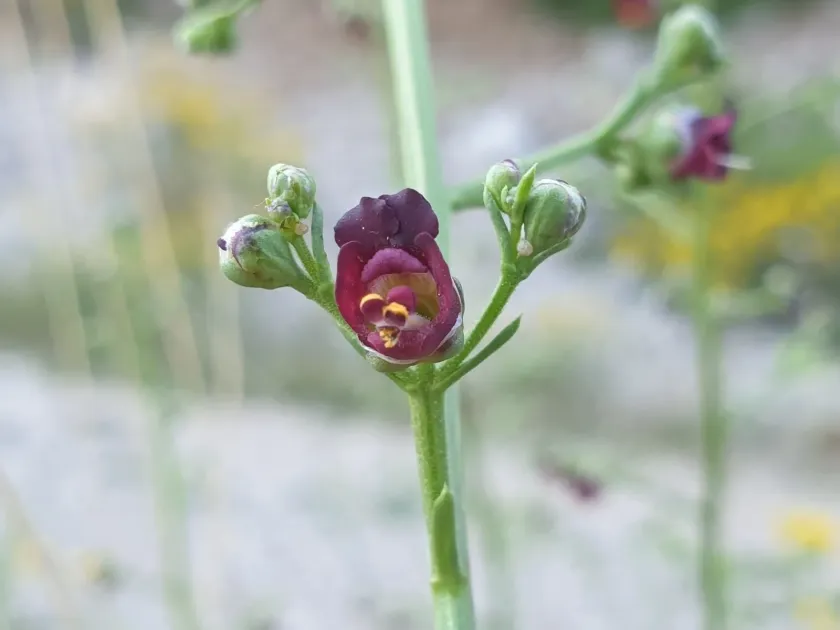
Description
Sowing dates
Shining figwort, a member of the Scrophulariaceae family, is typically propagated through seeds. Sowing should be performed in late autumn or early spring, as the seeds often require a period of cold stratification to achieve optimal germination rates.
The planting site must be carefully prepared by clearing all weeds and ensuring the soil structure is friable. Seeds are sown at a shallow depth of approximately 0.5 to 1 centimeter, ensuring they remain adequately moist until establishment.
Once seedlings emerge, thinning is essential to maintain proper spacing, which prevents competition for resources and promotes healthier development. This practice also improves airflow around the base of the plants.
In nursery settings, propagating via seedlings allows for more controlled growth and higher establishment success. This method is preferred when uniform plant density is required for field production purposes.
The plant exhibits vigorous growth during the spring months. Providing sufficient space between rows, typically 30 to 40 centimeters, facilitates easier maintenance and weeding throughout the growing season.
Growing requirements
Shining figwort thrives in well-drained, fertile soil with a neutral to slightly alkaline pH. It prefers sunny locations but is adaptable to partial shade, making it quite versatile in different garden environments.
Consistent moisture is necessary, particularly during the active growth phase. However, the plant is intolerant of waterlogged soil, which can lead to root rot; therefore, selecting a site with good natural drainage is critical.
Regarding climate, the plant is relatively hardy, though it benefits from protection against harsh, desiccating winds. It adapts well to temperate regions, provided that extreme droughts are mitigated through regular irrigation.
Botanically, it is recognized by its glossy, opposite leaves and upright, branching stems. Its chemical profile makes it a subject of interest in pharmaceutical research, requiring specific management for high-quality yields.
Nutrient requirements are moderate; applying organic mulch or compost before the growing season provides the necessary elements for sustained health and promotes robust foliage development.
Main diseases and pests
Common pests include aphids, which often colonize the tender young buds and stems. Integrated pest management, such as applying insecticidal soaps or biological controls, is highly effective in managing these infestations.
Powdery mildew is the most frequent disease, manifesting as a white fungal layer on the leaves, usually under high-humidity conditions. Ensuring good ventilation and avoiding overhead irrigation can significantly reduce the risk of occurrence.
Root rot is a major threat linked to poor drainage or excessive watering. The most reliable prevention method is monitoring soil moisture and ensuring that water does not pool around the root zone.
Minor soil-borne pests can cause stress to the plant. Implementing crop rotation and maintaining soil health through organic amendments helps suppress the populations of these organisms over time.
Vigilance during the seedling stage is important, as young plants are more susceptible to insect damage and competition from invasive weeds. Regular field monitoring ensures that interventions are timely and effective.
Harvesting
Harvesting is best conducted during the peak flowering phase, as this is when the secondary metabolites of the plant reach their maximum concentration. Stems are cut at a distance of 10–15 centimeters above the ground.
Post-harvest handling requires efficient drying in a shaded, well-ventilated area to preserve the integrity of the chemical components. High temperatures must be avoided to prevent degradation of the plant material.
Seed collection should be timed carefully to occur just before the capsules split open. This maximizes yield and prevents the loss of genetic material through uncontrolled self-seeding on the field.
Stored material should be kept in breathable containers, such as paper bags, to prevent humidity buildup and mold growth. A cool, dry environment is optimal for long-term preservation of the harvested crop.
For industrial-scale cultivation, mechanical harvesting is possible, provided the plant population is uniform. Cleaning the harvested material promptly is essential to maintain quality standards and market value.