
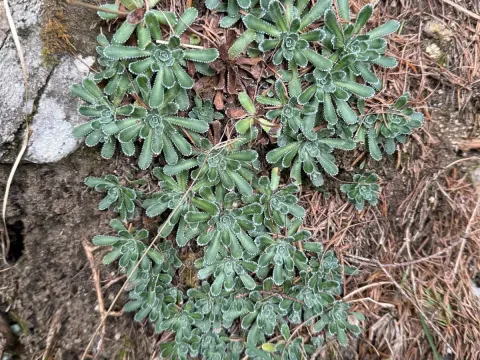
Saxifrage
Saxifraga L.
Sowing saxifrage seeds is best performed in late autumn or early spring. The seeds require a period of cold stratification to break dormancy, so winter sowing often yields the most reliable results for germination in early spring.
What the section contains
 Arends saxifrage
Saxifraga x arendsii Engl.
Arends saxifrage
Saxifraga x arendsii Engl.
 Fortune's saxifrage
Saxifraga fortunei (Maxim.) Hook. f.
Fortune's saxifrage
Saxifraga fortunei (Maxim.) Hook. f.
 Fortune's saxifrage
Saxifraga fortunei Hook. f. var. alpina (Matsum. & Nakai) Nakai
Fortune's saxifrage
Saxifraga fortunei Hook. f. var. alpina (Matsum. & Nakai) Nakai
 Saxifraga callosa
 Sm.
Saxifraga callosa
Saxifraga callosa Sm.
 Saxifraga callosa x Saxifraga longifolia
Saxifraga callosa x Saxifraga longifolia
Saxifraga callosa x Saxifraga longifolia
 Saxifraga cortusifolia
 Siebold & Zucc.
Saxifraga cortusifolia
Saxifraga cortusifolia Siebold & Zucc.
 Saxifraga longifolia
 Lapeyr.
Saxifraga longifolia
Saxifraga longifolia Lapeyr.
 Saxifraga rosacea
 Moench
Saxifraga rosacea
Saxifraga rosacea Moench
Saxifrage
When starting indoors, seeds should be sown in March using a light, well-drained substrate. Because the seeds are tiny, they should be surface-sown and pressed gently into the soil rather than covered, maintaining high humidity under a glass cover or plastic dome.
Germination typically occurs within two to three weeks when temperatures are maintained at 18–20°C. Once the seedlings emerge, it is essential to provide bright, indirect light and ventilation to prevent damping-off disease.
Seedlings should be pricked out into individual pots once the first true leaves have developed. This process encourages strong root development and ensures the plant is robust enough for transplanting into the garden later in the season.
Transplanting into the permanent garden site should occur after the risk of frost has passed in late spring. Proper spacing of 20–30 cm between plants is recommended to allow for adequate air circulation and to prevent overcrowding.
Saxifraga L. is a diverse genus of perennials belonging to the Saxifragaceae family, naturally occurring in mountainous regions across the Northern Hemisphere. Their biological adaptation makes them well-suited for rock gardens and alpine beds.
The culture thrives in well-drained, porous soils that mimic their native rocky habitats. Incorporating grit, gravel, or coarse sand into the soil profile is critical to ensure proper water drainage, as these plants are highly susceptible to root rot in waterlogged conditions.
Light requirements typically favor partial shade, particularly in regions with hot summers. Protection from the intense afternoon sun is necessary to prevent leaf scorching and to maintain the dense, rosette-forming growth habit typical of the species.
Temperature management involves choosing a site that avoids stagnant heat. Most saxifrage species are hardy, but they appreciate mulching with gravel or stone chips to keep the root zone cool and prevent moisture from touching the delicate foliage.
Watering should be consistent but moderate. The goal is to keep the soil moisture balanced—damp enough to support growth but dry enough to prevent fungal proliferation. Drip irrigation is often preferred to keep the foliage dry.
The primary threats to saxifrage are moisture-related fungal diseases, such as root rot and leaf spot. These pathogens thrive in stagnant, humid environments, often triggered by poor site selection or inadequate soil drainage systems.
Prevention focuses on maintaining good airflow and ensuring the planting area is never overly wet. If disease outbreaks occur, immediate removal of affected tissue and the application of appropriate fungicides are necessary to save the plant.
Insects like aphids and spider mites can damage the plant during periods of drought or extreme heat. Regular inspection and the use of insecticidal soaps or biological controls can effectively manage these populations before significant damage occurs.
Slugs and snails are major predators of saxifrage, especially in moist gardens. Physical barriers, such as copper tape or crushed eggshells, are effective deterrents, while hand-picking remains a reliable method for small-scale infestations.
Root nematodes can cause stunted growth and yellowing of the foliage. Avoiding contaminated soil and ensuring a healthy, vigorous root system through proper fertilization and care are the best defenses against these subterranean pests.