
Saxifraga urbium
Saxifraga urbium
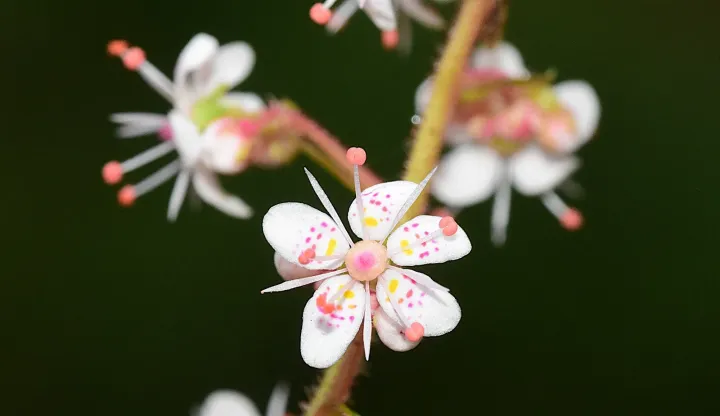
Description
Growing requirements
Saxifraga urbium, commonly known as London pride, belongs to the Saxifragaceae family. This perennial herb originates from the mountain regions of Ireland and parts of Europe, where it thrives in cool, moist habitats.
Botanically, it is characterized by evergreen, leathery leaves arranged in basal rosettes and tall, airy panicles of small pinkish-white flowers that bloom in early summer, adding a delicate aesthetic to shaded areas.
To ensure optimal growth, the soil must be well-drained yet moisture-retentive. It performs best in nutrient-rich loams with an addition of leaf mold or compost to mirror its natural woodland habitat.
The plant demonstrates significant shade tolerance, making it an excellent candidate for underplanting trees or shrubs. It prefers locations where it is protected from the intense heat of the afternoon sun.
Cultural practices involve maintaining a consistent moisture level throughout the growing season. Though quite hardy, the plant benefits from a light layer of mulch during winter in colder climates to protect the roots.
Main diseases and pests
The primary threat to Saxifraga urbium is crown rot, often caused by waterlogging or poor air circulation around the basal rosettes. Proper site drainage is the most effective preventative measure.
Slugs and snails are frequent pests that feed on the succulent foliage. Gardeners often use organic barriers or traps to manage these populations without relying on harsh chemical pesticides.
Aphids can occasionally infest the flower stalks during the blooming period. These insects may be controlled by manually removing them or by applying a gentle stream of water to dislodge them.
Spider mites are potential threats during prolonged dry and hot periods. Maintaining adequate soil and ambient moisture is crucial to preventing mite outbreaks on the foliage.
Fungal leaf spot diseases can occur if the foliage remains wet for extended periods. Pruning away damaged or overcrowded leaves can significantly improve air movement and reduce fungal pressure.