
Saxifraga callosa
Saxifraga callosa Sm.
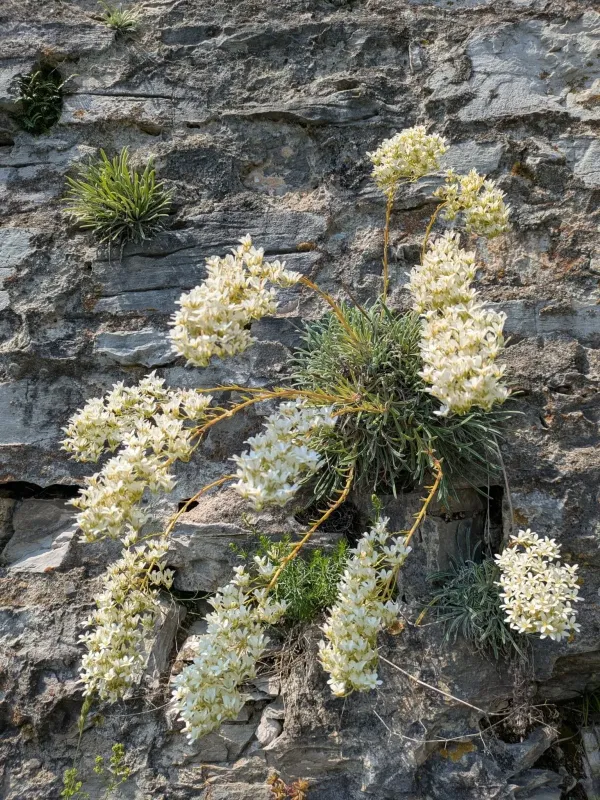
Description
Sowing dates
Propagation of Saxifraga callosa via seeds requires a cold stratification period to improve germination rates, typically performed in late winter.
Sowing should be done in a well-draining, gritty seed compost, pressing the seeds lightly into the surface without burying them too deeply.
Vegetative propagation is achieved by separating the offsets or rosettes from the parent plant immediately after the flowering season is complete.
When transplanting young plants into the garden, select a location that mimics their native cliffside habitat, ensuring the roots have enough space to establish.
Spacing is essential for the long-term health of the rosettes; keeping them 20 centimeters apart ensures proper airflow and reduces the risk of fungal infections.
Growing requirements
Saxifraga callosa, a member of the Saxifragaceae family, is a slow-growing perennial succulent ideally suited for rock gardens and crevice planting.
The plant thrives in alkaline, rocky, or scree-based soils, preferably containing high calcium levels to support the calcification process in its foliage.
It requires bright, filtered sunlight to maintain its compact, silvery-green rosettes and to ensure a vigorous bloom during the late spring season.
Agronomic management involves minimal watering once established, as the plant is highly drought-tolerant and sensitive to excessive water at its base.
Winter care is crucial: provide protection against excessive wetness, as dormant Saxifraga callosa specimens are prone to rotting in soggy, cold environments.
Main diseases and pests
Fungal rots, particularly caused by Phytophthora or Pythium species, are the primary biological threats when drainage conditions are suboptimal.
Poor circulation often leads to the development of powdery mildew on the leaves, which can disfigure the tight rosettes if left untreated.
Insect pests such as spider mites and mealybugs may colonize the leaf axils, especially during hot and dry summer conditions.
Gastropods like slugs represent a significant physical threat, feeding on the succulent leaves and often destroying young growth overnight.
- Regular monitoring of the foliage for signs of pests or wilting.
- Application of sharp grit mulch around the base to keep leaves dry.
- Pruning of dead rosettes to encourage healthy new growth.