
Saxifraga umbrosa
Saxifraga umbrosa
Description
Growing requirements
Saxifraga umbrosa, commonly known as London pride, is a herbaceous perennial belonging to the Saxifragaceae family. Native to the mountain regions of Western Europe, this plant is well-adapted to shaded, humid environments and rocky mountain terrain.
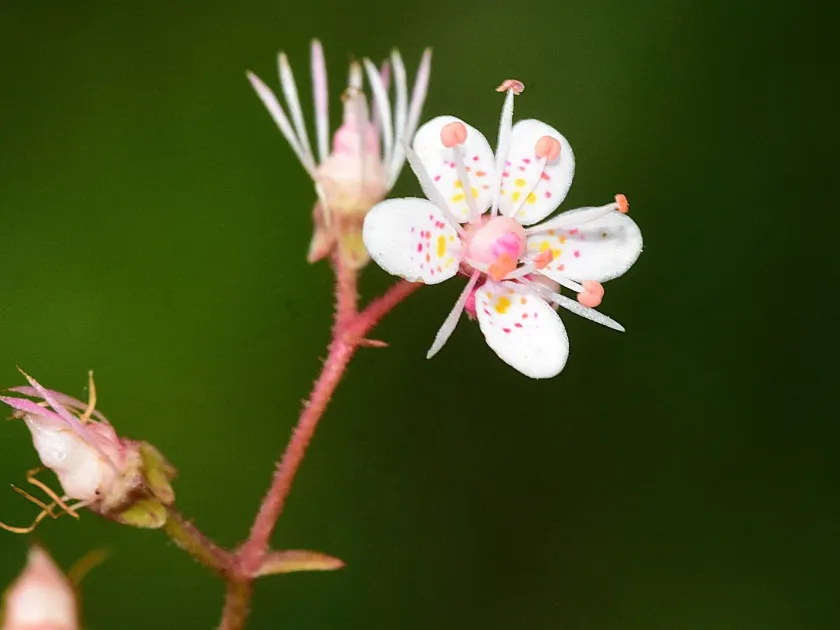
The plant features rosettes of evergreen, leathery, dark green leaves with serrated margins. During the late spring and early summer, it produces slender flower stalks topped with dainty, airy panicles of white or pinkish flowers, adding vertical interest to the foliage.
For optimal growth, it requires cool, shady locations with moist but well-draining soil. High levels of organic matter in the soil significantly improve plant vigor, while heavy clay soils should be amended with grit to ensure adequate aeration for the root system.
The cultural requirements include a temperate climate with consistent soil moisture throughout the growing season. In hot and dry summers, supplemental irrigation is essential to prevent wilting and maintain the structural integrity of the evergreen leaf rosettes.
The primary use of Saxifraga umbrosa is in ornamental gardening, particularly for underplanting shrubs, lining paths in woodland gardens, or adding texture to rock gardens where larger plants might struggle. It is a reliable groundcover that suppresses weeds.
Main diseases and pests
The most common disease threat is root rot, which typically occurs if the plant is sited in poorly drained soil or if watering is excessive. Preventing waterlogging is the key to maintaining healthy stands of this ornamental crop throughout the year.
Slugs and snails are the most significant pests affecting this plant, particularly in damp and cool spring conditions. They feed on the succulent leaves, and their presence can be mitigated by keeping the area clean and using barrier methods like sharp gravel around the crowns.