
Seguier's saxifrage
Saxifraga seguieri
Description
Growing requirements
Seguier's saxifrage (Saxifraga seguieri) is a perennial herbaceous plant belonging to the Saxifragaceae family. Native to the high-altitude regions of the Alps, it is highly adapted to life in crevice habitats and rocky terrains.
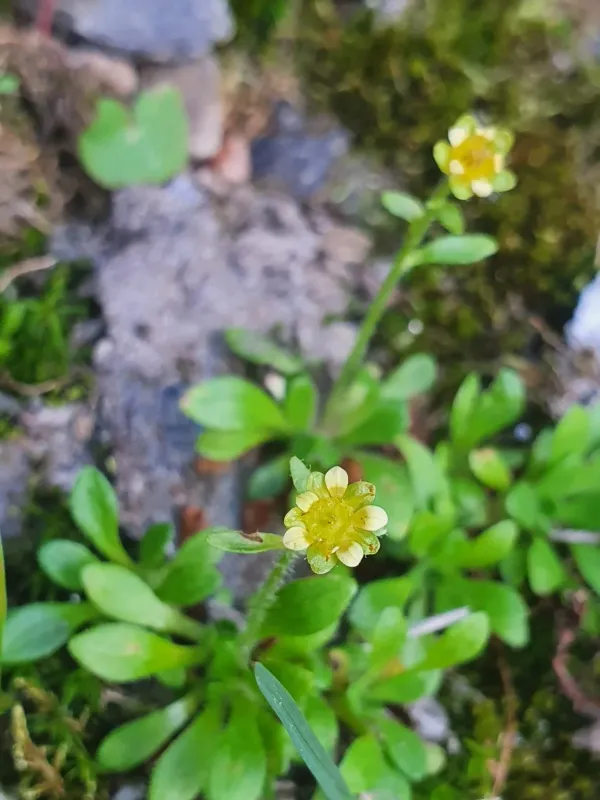
Botanically, it forms dense, low-growing cushions of rosettes, which are characteristic of its adaptation to harsh mountain climates. The leaves are typically small and glandular, contributing to the plant's distinct appearance and drought resistance.
Successful cultivation requires a substrate that mimics its natural limestone habitat. The soil must be gritty, poor in nutrients, and have exceptional drainage capacity to prevent root rot during winter and rainy periods.
The plant thrives in cool, alpine-like conditions. Exposure to direct sunlight is beneficial, provided that the ambient temperatures remain moderate. In regions with very hot summers, partial shade is strongly recommended for survival.
This species is primarily utilized in horticulture for rock gardens and troughs, where collectors seek to replicate the unique aesthetics of alpine flora. Its slow growth and compact size make it perfect for miniature landscape designs.
Main diseases and pests
The most significant threat to Saxifraga seguieri is crown rot, caused by excessive moisture and poor drainage. This is often triggered by soil that retains too much water during dormant months, leading to plant collapse.
Aphids and mites can pose problems during the growth season, especially when the plants are stressed by heat or drought. These pests cluster within the tight leaf rosettes, making them difficult to detect and treat manually.
Fungal pathogens such as mildew can develop if the planting site lacks sufficient airflow. Maintaining a dry surface around the base of the rosettes by using a stone mulch is essential for long-term health.
Slugs and snails are major pests that graze on the succulent foliage. Monitoring for physical damage to the leaves should be a regular part of maintenance routines to prevent significant aesthetic loss.
Competition from weeds is a major constraint in the garden environment. Weeds grow much faster than this saxifrage and can easily overtake it, depriving the plant of necessary light and air circulation, eventually leading to its demise.