
Fortune's saxifrage
Saxifraga fortunei (Maxim.) Hook. f.
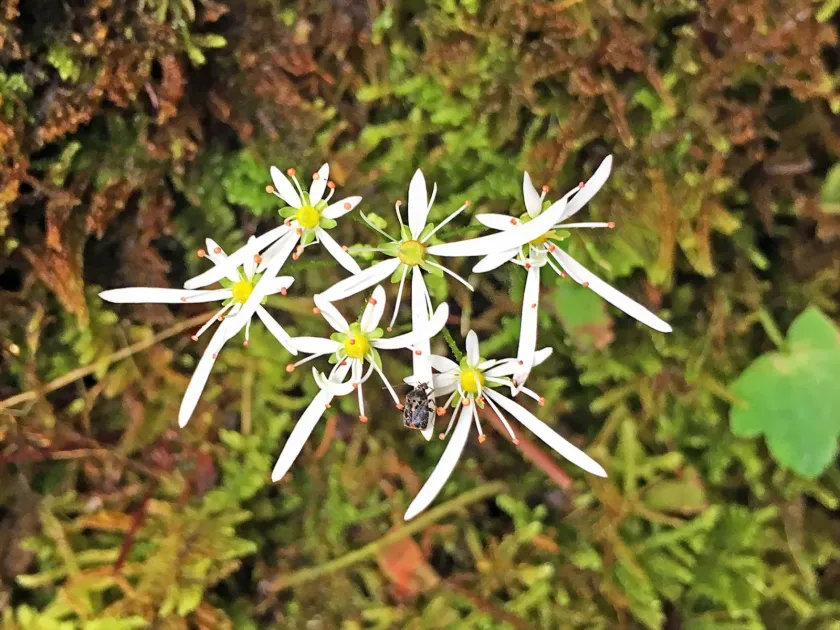
Description
Growing requirements
Fortune's saxifrage is a perennial herb belonging to the Saxifragaceae family. Native to the humid and rocky woodlands of East Asia, specifically China and Japan, this plant has become a popular choice for gardeners seeking to add texture and interest to shaded areas of the landscape.
The plant is defined by its basal rosette of thick, kidney-shaped, or rounded leaves that often feature a glossy texture. It is particularly noted for its unique blooming cycle, which typically occurs in the late autumn, providing late-season color when most other perennials have finished flowering.
Successful cultivation requires a location with partial to full shade. Direct sunlight can cause leaf scorch, particularly in warmer climates. The ideal soil should be rich in organic matter, consistently moist, but well-drained, as the plant cannot tolerate waterlogged conditions that lead to root decay.
Agrotechnical maintenance includes regular monitoring of moisture levels, as the plant is susceptible to drought stress. Adding a layer of organic mulch around the base helps retain soil moisture and stabilizes soil temperatures during the fluctuating conditions of the autumn and spring seasons.
In terms of usage, Fortune's saxifrage is an excellent specimen for rock gardens, woodland borders, and shaded containers. It thrives in environments that mimic its natural habitat, making it a reliable choice for gardeners in temperate zones who prioritize perennial plant health and aesthetic appeal.
Main diseases and pests
The main threats to the health of Fortune's saxifrage include various fungal diseases that cause root rot. These are primarily caused by over-irrigation or improper soil drainage. Ensuring that the planting site has adequate slope or drainage material is essential for disease prevention.
Slugs and snails are the most common pests, as they are attracted to the succulent nature of the leaves. Gardeners can manage these threats through the use of organic pest barriers, trapping, or targeted application of iron phosphate baits if the infestation levels become significant.