
Saxifraga vandellii
Saxifraga vandellii
Description
Growing requirements
Saxifraga vandellii is a perennial herbaceous plant belonging to the Saxifragaceae family. This species is native to the calcareous crevices of the Italian Alps, an environment that dictates its specific physiological requirements and survival strategies in cultivation.
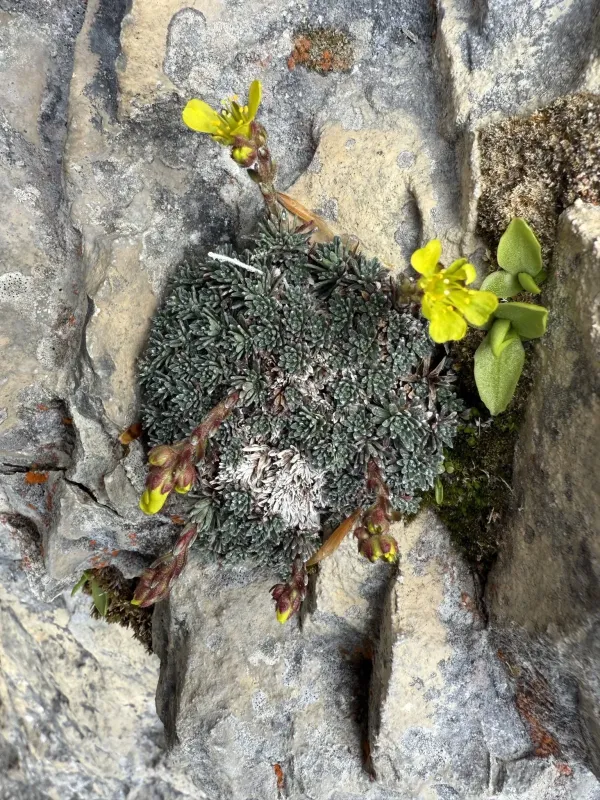
Botanically, the plant is characterized by the formation of dense, rigid, cushion-like rosettes. The leaves are typically encrusted with calcium carbonate, a natural adaptation that helps the plant regulate water balance and survive in extreme, rocky, and high-altitude microclimates.
The climate requirements for this species include cool, temperate conditions with sufficient air circulation. It thrives in locations that mimic the alpine environment, avoiding high temperatures and excessive humidity, which are detrimental to its succulent-like foliage.
Soil requirements are strict: the substrate must be highly porous, stony, and rich in limestone. Cultivation in standard garden soil is rarely successful; therefore, a specialized mixture of crushed stone, grit, and minimal loam is recommended to ensure optimal drainage.
In terms of хозяйственного (horticultural) use, Saxifraga vandellii is highly valued by specialized alpine collectors and landscape architects. It is primarily used in crevice gardens, troughs, and alpine houses where its architectural form and early spring blooming can be fully appreciated.
Main diseases and pests
The primary health issues for this plant involve crown rot and root decay, almost always triggered by stagnant water around the root neck. Proper placement in vertical crevices or sloped terrain is crucial to allow gravity to drain moisture away from the center of the plant.
Pest management involves monitoring for common rock garden pests such as aphids and spider mites, which can infest the rosettes during warm, dry spells. Integrated pest management, focusing on physical removal or mild systemic treatments, is preferred to protect the plant's delicate structure.