
Snow saxifrage
Saxifraga nivalis
Description
Growing requirements
Snow saxifrage (Saxifraga nivalis) is a perennial herb belonging to the Saxifragaceae family. This species is native to arctic and alpine regions, showing remarkable resilience to cold environments.
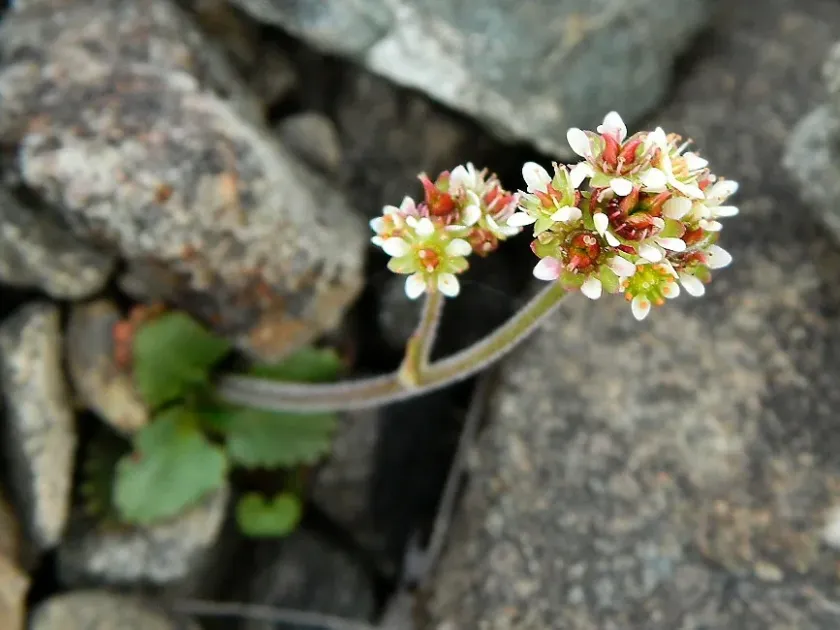
Botanically, it features a basal rosette of leaves that are leathery and often serrated. These leaves help the plant conserve water and survive in harsh, windswept arctic conditions.
The inflorescence consists of a dense, cluster-like head of tiny white or greenish flowers borne on a sturdy, erect stem. Flowering typically occurs during the short arctic summer.
In cultivation, it requires conditions that mimic its natural habitat: cool temperatures, high humidity, and excellent soil drainage. It thrives in rock crevices or stony, nutrient-poor substrates.
Proper aeration is essential for this species to prevent humidity-related issues. It is best suited for rock gardens, trough gardens, or specialized alpine houses where conditions can be strictly controlled.
Main diseases and pests
The most significant threat to Saxifraga nivalis is root rot caused by stagnant water, which often occurs if the soil is too heavy or poorly drained.
Fungal pathogens can attack the plant during damp and stagnant weather conditions, leading to leaf spot diseases and decaying foliage within the rosette.
Aphids can be a major problem during the growing season, particularly when they cluster on the developing inflorescences, stunting the plant's growth.
Spider mites are known to infest the plant in dry, indoor environments, causing fine webbing and discoloration of the leaf tips.
Inappropriate temperature fluctuations during dormant winter months can weaken the plant's crown, making it susceptible to secondary infections in the early spring.