
Osyris alba
Osyris alba
Description
Growing requirements
Osyris alba is a perennial evergreen shrub belonging to the Santalaceae family. It is a well-known hemiparasite that requires a host plant to supplement its water and mineral uptake through specialized underground structures known as haustoria.
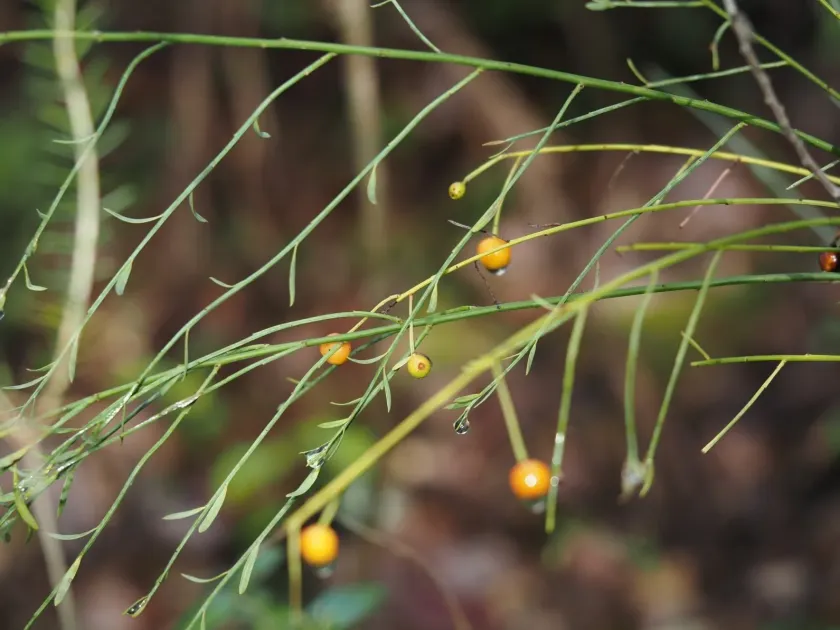
The shrub features numerous thin, upright, and green branches, often reaching heights of up to one meter. The leaves are small, narrow, and leathery, an adaptation that allows the plant to thrive in arid and sunny environments typical of its native range.
The species is primarily distributed throughout the Mediterranean basin, Southern Europe, and parts of Northern Africa. It is typically found in maquis shrublands, rocky slopes, and open woodlands where it competes effectively for space and resources.
Climatic requirements involve warm, dry summers and mild winters with sufficient light exposure. Because it obtains nutrients from its hosts, Osyris alba can grow in nutrient-poor, rocky soils where other vegetation might struggle to survive without additional fertilizers.
Regarding its utility, Osyris alba is not a commercial agricultural crop. However, it is of significant scientific interest to botanists and ecologists studying plant-parasite interactions and the resilience of xerophytic plant communities in changing climates.
Main diseases and pests
As a wild-growing hemiparasite, Osyris alba has evolved high levels of resistance to many diseases that typically affect conventional crops. Its chemical composition, which includes various bioactive compounds, helps to deter herbivores and insect pests.
The main threats to the plant are related to habitat destruction rather than pests or pathogens. Deforestation, urban development, and intense agricultural conversion of rocky lands can lead to the fragmentation of its natural population and loss of host species.
Fungal pathogens may occasionally occur in regions with excessive moisture, although the plant's preference for well-drained slopes generally prevents such issues. There is no standard chemical pest control program for this species due to its ecological role.
Competition from invasive plant species is a growing concern. When non-native aggressive vegetation takes over the landscape, the delicate balance between Osyris alba and its hosts can be disrupted, leading to a decline in local shrub density.
Conserving the species requires protecting its natural habitats and ensuring the health of the host plants it relies upon. Ongoing ecological studies help clarify the role this shrub plays in stabilizing Mediterranean landscapes and biodiversity.