
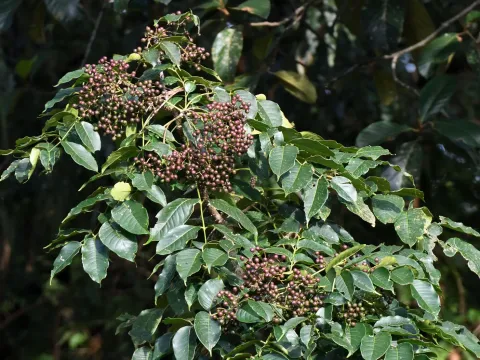
Zanthoxylum rhetsa
Zanthoxylum rhetsa
Propagation of Zanthoxylum rhetsa is primarily achieved through seeds, which should be sown fresh to ensure optimal germination rates.
What the section contains
Zanthoxylum rhetsa
The seeds have a relatively short viability, making prompt sowing essential for establishing a healthy nursery population of the crop.
A well-draining potting medium is recommended to support the development of the root system during the initial growth stages.
Maintenance of moderate humidity levels and temperatures between 20°C and 25°C will facilitate consistent and uniform seedling emergence.
Gradual hardening off of young plants is necessary before transplanting them into the field to withstand outdoor environmental conditions.
Zanthoxylum rhetsa is a member of the Rutaceae family, recognized for its aromatic properties and its role as a botanical source of spice.
This species thrives in tropical regions, requiring a warm climate with distinct periods of rainfall to support its rapid vegetative growth.
It prefers deep, fertile, and well-draining soils, and it is highly susceptible to waterlogging, which can cause significant root damage.
Full sun exposure is crucial for the tree to produce high concentrations of the essential oils that give its fruits their signature flavor.
The tree requires protection from strong winds, as its branches are brittle and can easily suffer mechanical damage under adverse weather.
The economic value of Zanthoxylum rhetsa lies in its fruits, which are processed to serve as a pungent and aromatic culinary spice.
Yields are highly influenced by site selection, specifically ensuring that the trees receive adequate sunlight and consistent irrigation.
As the tree matures, its capacity for fruit production increases, allowing for sustained harvests if the trees are properly maintained.
Regular pruning is often practiced to manage tree height and improve accessibility to the fruit clusters during the busy harvest season.
Optimal soil fertility management and balanced nutrient applications can significantly boost the overall quantity and quality of the yield.
Pest management is focused on controlling sap-sucking insects like aphids and scale insects that cluster on the tender new growth.
Fungal pathogens associated with high moisture can lead to leaf spot or root rot if the orchard environment is not properly ventilated.
Cultural practices, such as maintaining proper spacing between trees, play a vital role in reducing the risk of disease spread in the plantation.
Integrated pest management strategies are advised to minimize chemical residues on the aromatic fruits destined for culinary use.
Sanitation practices, including the removal of infected plant debris, help in maintaining a healthy environment for the growing trees.
Harvesting is traditionally performed by hand, taking great care to avoid the sharp spines often found on the branches of mature trees.
The fruits are gathered when they reach a specific stage of physiological maturity, characterized by a change in their outer shell color.
Post-harvest processing involves immediate drying to preserve the essential oils and prevent microbial growth in the stored spice product.
Drying is conducted in shaded, well-ventilated conditions to maintain the intense flavor profile required for premium-grade market specifications.
Once dried, the fruits are stored in moisture-proof containers to ensure they retain their potency and quality during transport and storage.