
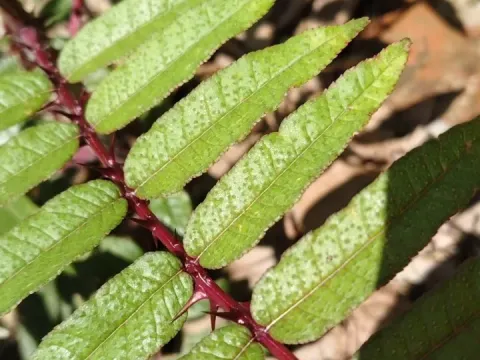
Ailanthus-leaved prickly ash
Zanthoxylum ailanthoides
Propagation of Zanthoxylum ailanthoides is primarily achieved through seeds, which should be sown fresh to ensure the highest germination rates possible.
What the section contains
Ailanthus-leaved prickly ash
Seeds require a period of cold stratification before sowing to break dormancy, mimicking the natural winter conditions the species encounters in its native range.
The optimal sowing medium is a well-draining, sandy loam mix that maintains moisture without becoming waterlogged, which is critical for seedling health.
Seedlings develop slowly during the first season and must be kept in a sheltered location with partial shade to prevent desiccation from direct sunlight exposure.
Once the plants have reached a stable size of about 30 centimeters, they can be hardened off and transplanted to their permanent growing location in the field or garden.
Belonging to the Rutaceae family, this species thrives in sites with full sun exposure, which is necessary for healthy leaf development and oil production.
The tree prefers deep, fertile, and slightly acidic soils, although it shows significant tolerance to various soil textures provided that drainage is adequate.
Climate requirements include moderate rainfall and protection from harsh, drying winds, which can damage the delicate foliage and reduce overall plant vigor.
Water management is essential: while the tree is relatively drought-tolerant once established, supplemental irrigation during prolonged dry spells is recommended.
Nutrient application should focus on a balanced NPK fertilizer in the early spring to support rapid vegetative growth and development of the compound leaves.
The primary economic output of Zanthoxylum ailanthoides consists of its aromatic leaves and seeds, which are prized for their pungent, citrus-like flavor profile.
The plant is frequently harvested for its volatile oils, which contain compounds useful in both the culinary world as a spice and in the fragrance industry.
Fruits appear in dense clusters and should be harvested just as the capsules begin to split, ensuring that the dark seeds are gathered before they drop to the ground.
The wood of the tree is surprisingly dense and has a unique aesthetic, often utilized in artisanal woodworking for specialized projects or small-scale furniture production.
Ongoing research suggests that the plant has potential in agroforestry, acting as a productive edge crop that also provides habitat for beneficial pollinating insects.
Zanthoxylum ailanthoides is generally hardy and resistant to many common pests, thanks to the potent essential oils present throughout the plant's tissues.
However, it can still be susceptible to infestation by scale insects or aphids if the plant is stressed by improper environmental conditions or nutrient deficiencies.
Root rot is the most common pathology, usually resulting from poorly drained soil or excessive irrigation that deprives the roots of necessary oxygen.
Maintenance should include periodic pruning to remove crossing or dead branches, which improves air circulation and reduces the probability of fungal infections.
Monitoring the undersides of leaves during the growing season allows for early detection of potential pest outbreaks, facilitating easier non-toxic control measures.