
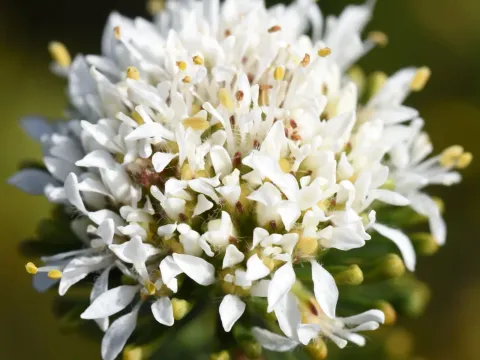
Agathosma
Agathosma
Agathosma is a genus of perennial evergreen shrubs belonging to the Rutaceae family. In industrial farming, the crop is typically propagated via seeds or vegetative cuttings in controlled greenhouse environments.
What the section contains


Agathosma
Sowing requires a specialized substrate rich in sand and drainage materials. Maintaining stable temperature and moderate moisture levels is essential for successful germination, which can be a slow process in natural conditions.
Young seedlings require careful handling during transplanting, as the root system of Agathosma is sensitive to damage. Once they reach a height of 10–15 cm, they are moved to open ground or permanent containers.
Planting density must be carefully managed to ensure adequate air circulation between shrubs, which is crucial for preventing fungal infections during periods of high humidity.
The culture exhibits slow growth during the initial years; therefore, fields must be kept free of weeds that could compete with and suppress the young plants during the early stages of development.
Native to South Africa, Agathosma has high requirements for sunlight and light intensity. It is best suited for cultivation in open fields that are protected from strong, cold winds.
The soil for this crop should be light, well-drained, and have a slightly acidic or neutral pH level. Waterlogging in the root zone is detrimental to the plant and often leads to the development of root rot.
A moderate temperature climate is ideal. Agathosma does not tolerate frosts or severe temperature fluctuations, which restricts its large-scale cultivation to subtropical regions.
Moisture requirements include regular but moderate watering. While the plant has some resistance to short-term drought, a consistent water balance is necessary to ensure high-quality essential oil production.
Success depends on soil chemical composition rich in organic matter but low in lime, as the plant is prone to chlorosis if the acidity level of the substrate is not maintained correctly.
The primary harvest target is the leaves of Agathosma, which contain valuable essential oils. Harvesting is typically conducted during full bloom when the concentration of active substances in the biomass is at its peak.
The process involves pruning the upper parts of the shoots. It is vital to use sharp tools to minimize tissue damage, ensuring the plant recovers quickly for the next growth cycle.
Post-harvest, the leaf material must be dried carefully in shaded, well-ventilated areas. Direct sunlight during the drying process leads to the evaporation of essential oils, significantly reducing the quality of the raw material.
Industrial processing involves distillation to extract "buchu oil," which is widely used in the pharmaceutical and fragrance industries due to its distinctive and pungent aroma.
The dried product must be stored in airtight containers in a cool environment to prevent the oxidation of active compounds housed in the glandular dots on the leaf surface.