
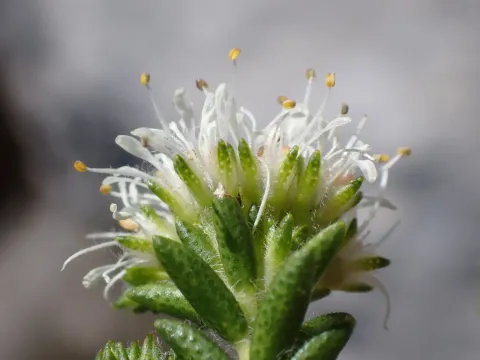
Agathosma
Agathosma Willd.
Sowing Agathosma seeds is best performed in a greenhouse environment in early spring as daylight hours start to increase. The optimal temperature for seed germination ranges between 20 and 22 degrees Celsius.
What the section contains
Agathosma
To improve germination rates, seeds should undergo stratification or pre-soaking in growth stimulants. Planting depth must be kept minimal, as Agathosma seeds require exposure to light for successful development.
Pricking out seedlings is recommended once the first pair of true leaves has formed. Since the plant is highly sensitive to root disturbance, using biodegradable peat pots is the preferred method for propagation.
Transplanting into open ground or permanent greenhouse beds should only occur after all risks of frost have passed. Hardening off the seedlings gradually over two weeks is necessary to ensure successful adaptation.
In large-scale farming, maintaining a precise planting scheme is essential to ensure adequate airflow between bushes, which helps prevent moisture accumulation in the root zone.
Agathosma is endemic to South Africa and belongs to the Rutaceae family. This crop thrives in well-drained, slightly acidic or neutral sandy soils enriched with organic matter.
The plant requires a high level of sunlight and performs poorly in shaded conditions. Direct sunlight exposure is crucial as it drives the accumulation of essential oils within the leaves, which determines product quality.
Climatic requirements include moderate air humidity and consistent, measured watering. Excessive soil moisture leads to rapid root rot, which is the leading cause of crop failure in cultivation.
Stable temperature regimes are vital, avoiding sudden fluctuations. In colder climates, Agathosma is often grown as a container plant and moved to protected indoor areas during the winter.
Wind protection is an important aspect of cultivation, as strong winds can damage fragile branches and cause premature leaf drop, resulting in the loss of diosphenol-rich foliage.
The productivity of Agathosma is measured by the total yield of dried leaves and young shoots. Harvesting is ideally conducted during the peak flowering stage when aromatic compound concentrations are at their highest.
Yield depends significantly on the age of the bushes, the quality of agronomic care, and light intensity. On average, commercial plantations allow for multiple harvest cycles within a single vegetative season.
Agathosma essential oils are highly valued in the perfume and pharmaceutical industries, making its cultivation economically attractive if extraction technologies are strictly observed.
Proper pruning techniques, which stimulate bushiness, can significantly increase the leaf yield per hectare in the second and third years of the crop's life cycle.
Drying the raw material requires strict adherence to temperature limits (not exceeding 40 degrees) to preserve volatile oil components and prevent oxidation of active substances.
The greatest threat to Agathosma comes from fungal root diseases, such as Phytophthora or root rot, typically triggered by waterlogged soil conditions.
Common pests include spider mites and mealybugs, especially when the crop is grown in greenhouse conditions with inadequate air circulation.
Disease prevention involves the use of preventive fungicides and strict crop rotation protocols to avoid planting on sites previously used for other Rutaceae family members.
Pest management should focus on biological control methods, considering that the plant is primarily harvested for high-quality medicinal and cosmetic raw materials.
Regular sanitary pruning and the removal of infected plant tissue are essential practices to contain outbreaks and maintain the overall health of the plantation population.
Harvesting is performed by manually or mechanically pruning the leafy stems. It is crucial not to over-prune the bush, leaving enough structural branches to allow for proper vegetative regeneration.
The optimal time for harvest is during the early morning hours, after dew has evaporated but before the heat of the day reaches its peak, to minimize essential oil loss.
Once harvested, the material must be immediately processed or dried to prevent fermentation and quality degradation, which is a common challenge with aromatic herbs.
During the harvest process, a sorting phase is required to discard yellowed or damaged leaves that could lower the quality of the final essential oil extract.
Stored dried product must be kept in airtight containers in a cool, dark place to maintain the biological activity of diosphenol for an extended period.