
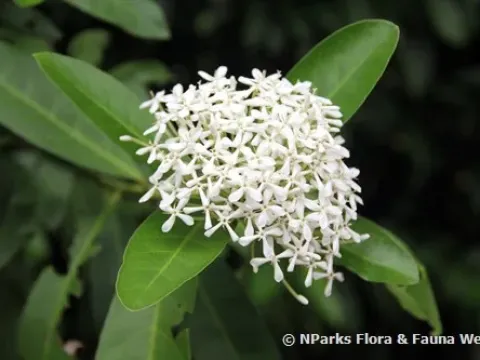
White Ixora
Ixora alba
White Ixora (Ixora alba) is an evergreen flowering shrub belonging to the Rubiaceae family. This species originates from the tropical regions of Southeast Asia, where it thrives in warm, humid forest environments.
What the section contains
White Ixora
The plant requires bright, filtered sunlight to flourish and produce its characteristic clusters of white blooms. Intense, direct sunlight during the middle of the day can scorch the foliage, while deep shade inhibits flower production.
Ideal soil conditions involve a well-drained, acidic substrate rich in organic matter. Ixora is sensitive to soil alkalinity, which can cause iron deficiency and subsequent chlorosis in the leaves.
Cultural practices include consistent watering with soft, room-temperature water. Maintaining a high ambient humidity is crucial for the health of the plant, especially when grown in indoor or greenhouse settings.
Morphologically, Ixora alba features glossy, leathery leaves arranged in opposite pairs. The flowers are arranged in large, rounded terminal corymbs, which serve as a major ornamental attraction in landscaping and botanical collections.
Common pests affecting White Ixora include aphids, mealybugs, and scale insects. These pests often congregate on the undersides of the leaves or along the tender stems, requiring timely intervention to prevent plant stress.
Fungal issues, such as leaf spot or root rot, may occur if the plant is grown in waterlogged conditions or lacks adequate ventilation. Preventive measures include proper spacing, avoiding overhead irrigation, and maintaining healthy soil structure.