
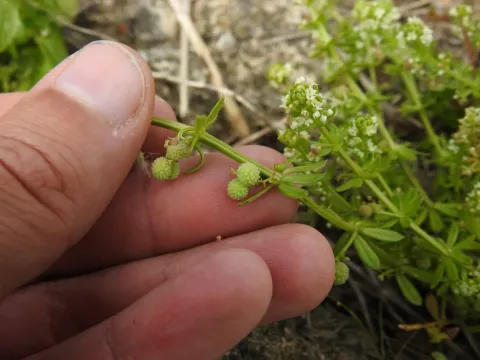
Warty bedstraw
Galium verrucosum
Warty bedstraw (Galium verrucosum) is an annual herbaceous plant belonging to the Rubiaceae family. In agricultural settings, it is primarily recognized as a field weed that poses a challenge to crop yields in specific geographical zones.
What the section contains
Warty bedstraw
Its natural range includes regions across the Mediterranean, the Caucasus, and parts of Central Asia. The plant is well-adapted to Mediterranean-type climates, thriving in open, sun-exposed areas with seasonal variations in precipitation.
Regarding soil requirements, the species favors well-drained, light soils, particularly those with a slightly alkaline or calcareous composition. It displays significant resilience to drought-prone environments once established.
Agrotechnical management focuses on minimizing seed bank accumulation in the topsoil. Proper crop rotation and timely field preparation are critical to suppressing its growth and reducing the competition for essential soil nutrients.
From an agricultural standpoint, the plant is considered a nuisance rather than a cultivated crop. It competes aggressively with cereals and industrial crops, often leading to reduced vegetative biomass and lower final grain yields.
The primary threats to the survival of this species are various fungal diseases, such as powdery mildew and rusts, which can significantly debilitate plant health under humid conditions.
Insect pests, including various beetles and hemipterans, often target the seeds and stems, limiting the reproductive success of the plant in a field setting.
Weed control programs commonly utilize selective herbicide applications. These chemicals are designed to target the biochemical pathways of the bedstraw without causing phytotoxicity to the desired crops.
Mechanical operations, such as deep plowing and harrowing, are essential components of integrated pest management (IPM) to bury seeds and eliminate early-season seedlings.
Continuous monitoring of field margins is recommended to prevent the spread of the species into primary cultivation areas, where it could otherwise become a persistent and costly weed problem.