
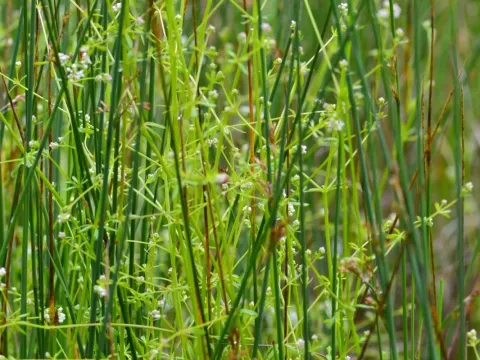
Weak bedstraw
Galium debile
Weak bedstraw (Galium debile) is a perennial herbaceous plant belonging to the Rubiaceae family. It is typically found in moist environments, where its growth habit allows it to thrive in specific wetland or meadow ecosystems.
What the section contains
Weak bedstraw
Botanically, the species is distinguished by its thin, often prostrate stems that reach out through surrounding vegetation. Its leaves are usually whorled, and the plant produces small, white flowers that characterize this genus.
Regarding environmental requirements, the plant thrives in soils with high moisture content. It is well-suited for riparian zones, fens, and areas with consistent hydrological supply, making it a natural component of water-logged grasslands.
Climatic adaptability is focused on temperate regions with sufficient precipitation. The plant is sensitive to prolonged drought, which halts its development and reduces its overall biomass production capacity within its natural range.
Agricultural management of the species involves balancing its role within permanent pastures. As a perennial, it regenerates through a network of rhizomes, allowing it to persist in stable environments and contribute to the biodiversity of the forage canopy.
Fungal diseases represent a significant threat to the plant, particularly in humid conditions. Pathogens such as rust fungi or leaf spots can hinder photosynthetic activity, directly impacting the health and vitality of the stand.
Pests including various types of aphids and leaf-feeding insects pose challenges to the integrity of the plant. Monitoring and managing these infestations is essential for maintaining the productivity of areas where this species is a dominant component.