
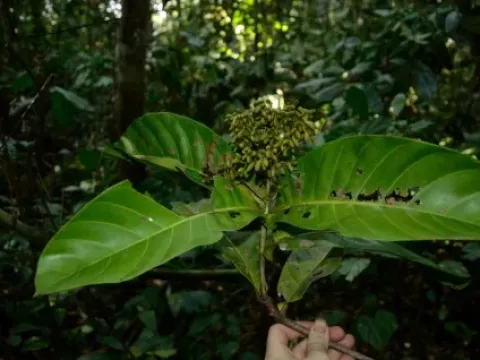
Yohimbe
Corynanthe
Yohimbe (Corynanthe yohimbe) is an evergreen tree belonging to the Rubiaceae family, native to the tropical forests of Western and Central Africa. It is biologically adapted to dense canopy environments and humid tropical climates.
What the section contains
Yohimbe
The tree thrives in regions with consistent high temperatures and high rainfall throughout the year. It does not tolerate cold stress, making its cultivation restricted to equatorial zones where climatic conditions remain stable and frost-free.
Regarding soil requirements, Yohimbe prefers deep, well-drained, and nutrient-rich soils. Excessive moisture retention in the root zone can lead to fungal issues, therefore, ensuring proper drainage is a critical component of its plantation management.
Agronomic practices for this species involve careful shade management during the seedling stage. As a forest-dwelling tree, young Yohimbe plants require protection from direct sunlight, which is typically achieved through intercropping or managed canopy structures.
The growth rate of the species is relatively slow, necessitating long-term management strategies. Cultivators often focus on selecting high-yield genotypes to ensure the economic viability of the plantations over extended timeframes.
The primary agricultural output of Yohimbe is its bark, which is highly valued for the presence of the alkaloid yohimbine. This substance is extensively used in the pharmaceutical industry to treat various vascular and hormonal conditions.
Harvesting techniques are delicate and require skilled labor. Strips of bark are typically harvested vertically from the trunk, ensuring that the cambium layer remains intact, which allows the tree to heal and eventually regenerate new bark over several years.
Post-harvest processing is essential for maintaining the chemical integrity of the active components. Once harvested, the bark is air-dried in covered, ventilated areas to prevent degradation by UV light or excessive heat, which could compromise the quality of the product.
Sustainability is a core component of modern Yohimbe farming. Over-harvesting leads to tree mortality, so agricultural protocols dictate strict cycles for bark removal, preventing the total depletion of any single tree within the plantation.
Quality control standards involve assessing the concentration of alkaloids in the dried bark. Consistency in harvesting methods and environmental control directly impacts the commercial value and purity of the final pharmaceutical extract.