
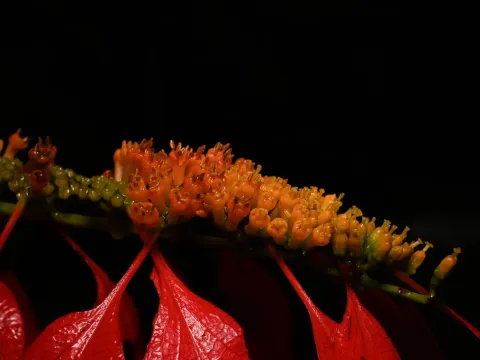
Warszewiczia coccinea
Warszewiczia coccinea
Warszewiczia coccinea, commonly known as the wild poinsettia, belongs to the Rubiaceae family. This evergreen shrub is famous for its striking, brilliant red bracts that cascade from the branches, making it a highly desirable species for tropical landscaping and botanical collections.
What the section contains
Warszewiczia coccinea
Originating from the tropical regions of Central and South America, this plant thrives in warm, humid conditions. It is typically found in the understory or forest edges where it receives adequate protection from the harshest direct sunlight while maintaining high exposure to ambient light.
Soil requirements for Warszewiczia coccinea include a rich, well-draining medium. A slightly acidic pH is ideal for nutrient absorption. Because the plant is native to rainforests, it requires consistent moisture and detests both prolonged droughts and waterlogged roots.
This species requires high humidity levels to maintain its foliage and floral display. In cultivation, constant air movement combined with humidity levels above 60% mimics its natural habitat and ensures optimal growth rates and structural integrity.
Temperature management is critical; the plant should ideally be kept in environments ranging from +20°C to +28°C. It is sensitive to chilling temperatures and must be protected from frost and cold drafts, which cause severe stress and potential death of the specimen.
Pests such as spider mites and mealybugs are the primary threats to Warszewiczia coccinea in controlled environments. These insects thrive in dry air, so maintaining proper humidity is a natural form of pest management, alongside the use of horticultural oils.
Root rot, caused by various soil-borne pathogens like Phytophthora, is a common issue resulting from over-irrigation. Ensuring a porous soil structure and avoiding stagnant water in the tray are essential measures to prevent the collapse of the plant's vascular system.
Leaf chlorosis is frequently encountered, usually stemming from micronutrient deficiencies or a pH imbalance in the soil. Supplemental fertilization with iron chelate and balanced trace elements is often necessary to restore the deep green coloration of the leaves.
Aphids can target the tender, actively growing tips of the plant, causing stunted growth and twisted leaves. Integrated pest management, including manual removal and the introduction of beneficial insects, is recommended for long-term health.
Fungal leaf spot diseases may develop if the canopy remains wet for too long without adequate ventilation. Ensuring proper spacing and air circulation within greenhouses is the most effective way to prevent the spread of fungal spores and leaf infections.